


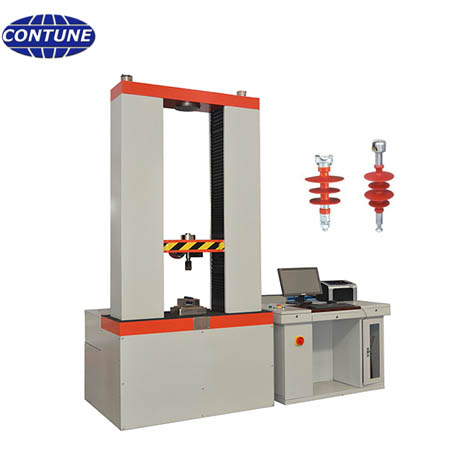
A mechanical load test machine for high voltage insulators verifies whether the product can withstand service-related forces and buyer acceptance requirements. The correct machine depends on load direction, sample length and product type.
Contune supplies customized insulator testing machines for manufacturers, utilities and laboratories.
Common mechanical load tests
Common tests include tensile, bending, cantilever, torsion and combined electro-mechanical strength tests. Each test requires a different loading method and fixture.
The machine should be selected based on the product and required test matrix.
Frame, actuator and sensor selection
The frame must be stiff enough for the maximum load, while the actuator must provide smooth and controllable loading. Sensors should match the required accuracy and measurement range.
Over-sizing increases cost, while under-sizing creates safety and reliability problems.
Sample handling and safety
High voltage insulators can be long, heavy or fragile. Handling equipment, operator space, guards and emergency controls must be considered during layout planning.
Large machines may need special foundations and commissioning support.
Reporting and quality records
Manufacturers often need test curves, peak load records and pass/fail documentation. Data output should be discussed before purchase.
Good records support production quality control and customer acceptance.
FAQ
What is the difference between tensile and bending tests?
Tensile tests pull along the axis; bending tests apply lateral load or moment.
Can mechanical testing be automated?
Loading and data recording can be automated, but sample installation and fixture changes may still require operators.
Does Contune provide custom mechanical testers?
Yes. Custom load range, frame size, fixtures and controls can be discussed for specific samples.
Need help selecting equipment? Contact Contune with your insulator type, voltage class, load range, required tests and target capacity.