Knowledge Center

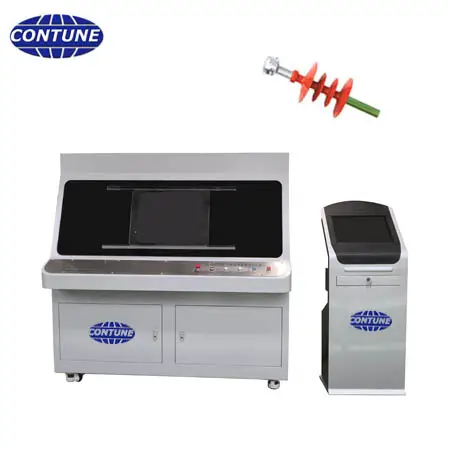
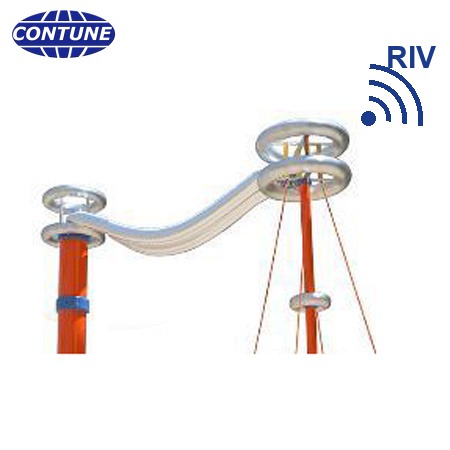
IEC 60437 RIV Test System RFQ: Receiver, Background Noise and Report Checklist

For an insulator RIV test-system RFQ, state the specimen and line configuration, the evaluation voltage and frequency, the receiver and coupling arrangement, the acceptable background noise, and the records your laboratory must deliver. A voltage rating alone cannot establish whether a radio-interference measurement will be usable: the installed test circuit and its own corona can […]
Knowledge Center

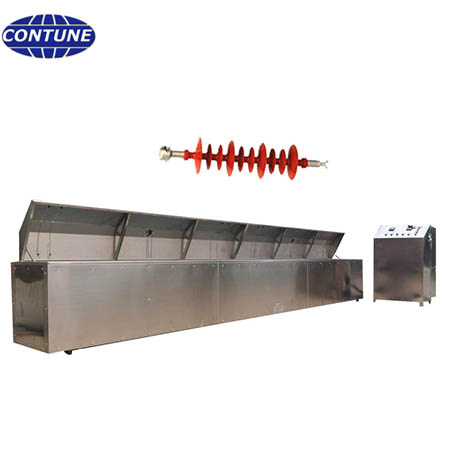
Thermal Shock Test of Disc Insulators: Verify the 50 K Cycle at FAT

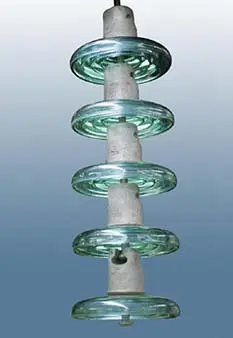
To verify a disc-insulator thermal shock station at factory acceptance, measure the air and water conditions for the specified 50 K difference, demonstrate controlled heating and rack transfer, then retain a time-stamped record for representative ceramic or glass units. The temperatures used to achieve the difference depend on the water at the installation site; 70 […]

Knowledge Center

UV Aging Chamber for Composite Insulators: Lamp Choice, Specimens and FAT

UV exposure can change the appearance and surface behavior of a composite insulator housing. A chamber specification must describe the light source, specimen geometry, moisture cycle and measurement records together. A nominal UV lamp count alone cannot tell a buyer whether the intended housing can be tested repeatably. This guide is grounded in Contune’s UV […]

Knowledge Center

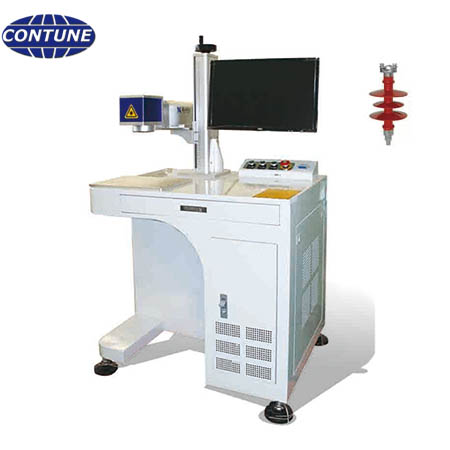
Laser Marking Composite Insulators: Legibility, Shed Qualification and Line FAT

A permanent mark can connect a finished composite insulator to its production batch, material records and final inspection. On silicone rubber sheds, however, a readable mark alone is not enough. The production team must establish that the chosen laser setting and location preserve the surface properties required by its own specification. This buyer guide draws […]

Knowledge Center

FRP Core Rod Oil Puncture Test: Specimen Control, Voltage Ramp and FAT

The oil puncture test evaluates the electrical breakdown behavior of a small FRP or ECR core-rod specimen used in a composite insulator. It is a material-sample test, not a puncture test on a complete insulator between its end fittings. This guide uses Contune product data for model C-FPT-20 and the product page reference to IEC […]

Knowledge Center

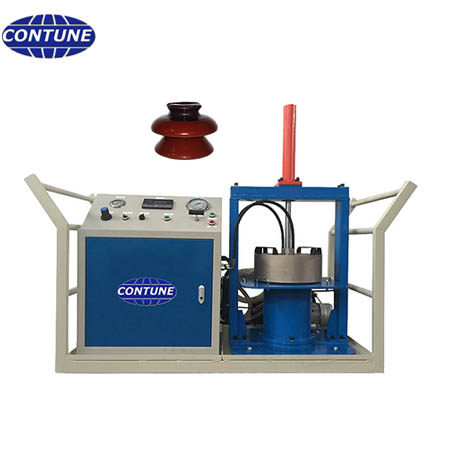
Porcelain Insulator Porosity Test: Specimen Preparation, 72-Hour Pressure Cycle and FAT

Porosity testing checks whether the fired porcelain body allows a dye solution to penetrate under sustained pressure. It is a destructive material test, so specimen preparation, pressure stability and interpretation of the freshly broken surface matter as much as the pressure rating of the vessel. This guide is based on Contune technical material for the […]

Knowledge Center

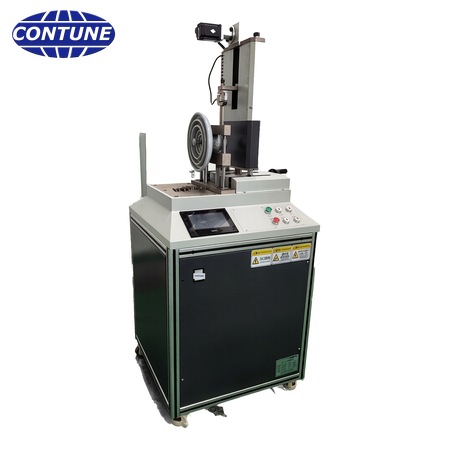
Insulator Locking Pin Test: R-Pin and W-Pin Loading, Fixtures and FAT

A locking pin prevents a ball-and-socket insulator coupling from separating in service. A useful test system must apply load in the pin axis without bending the pin or distorting the socket, capture peak force and protect the operator when the pin moves suddenly. This guide uses Contune’s SJX-1A technical agreement dated 2026. Final loads and […]

Knowledge Center

Composite Insulator Water-Immersion Pre-Stressing: 96-Hour Boiling Chamber Planning

Water-immersion pre-stressing exposes a complete composite insulator to prolonged heated salt water before the specified follow-up checks. A buyer must size the chamber around the actual insulator, control the full conditioning period and define safe loading, cooling and inspection—not merely order a vessel that can reach boiling. This guide uses Contune’s 2025 CBC-V25 brochure, which […]

Knowledge Center

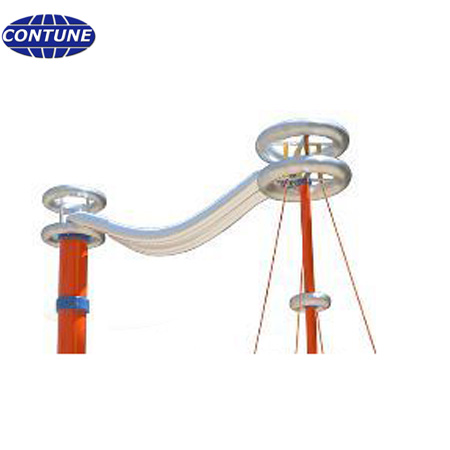
500 kV / 500 kVA AC Withstand Test System: Selection and FAT Checklist

A 500 kV nameplate does not by itself define a complete high-voltage laboratory. The test object, required voltage duration, capacitance, wet-test duty, clearances, earthing, measurement uncertainty and site utilities determine whether the system can perform the intended work safely and repeatably. This guide uses Contune’s 500 kV / 500 kVA brochure; final values must be […]

Knowledge Center

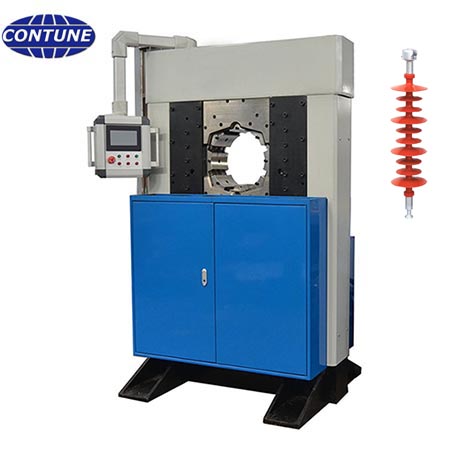
How to Select a CTCPM Crimping Machine: 140AS vs 165

Selecting a crimping machine from press force alone can produce an unusable production cell. End-fitting diameter, die stack, insulator length, handling space, production rate, traceability and quality controls all affect the choice. This guide uses Contune’s 2026 CTCPM comparison sheet; final specifications must be confirmed in the quotation. 2026 catalogue comparison Item CTCPM-140AS CTCPM-165 Typical […]

Knowledge Center