


Compression Test Machine for Concrete, Mortar and Bricks
Compression test machine for concrete at a glance
- Purpose: applies a compressive force to specimens of mortar, cement, concrete and bricks and records the compressive strength.
- Capacity: maximum compressive force 2000 kN.
- Accuracy: accuracy class 1, tolerance ±1%.
- Test space: compression space 320 x 320 mm.
- Control: computer software control with live force, live deformation, live curve and printed result.
- Standards: GB/T 2611, GB/T 17671 and GB/T 50081.
1. What this machine is used for
Concrete is used everywhere in construction and it carries load in compression, so the compressive strength of the material is the property that quality control checks. This machine compresses a specimen – a cube or cylinder of concrete, a mortar or cement prism, or a brick – at a controlled rate until it fails, and records the maximum force. The compressive strength is then calculated from that force and the loaded area of the specimen.
It is used by construction quality control laboratories, by ready-mix and precast producers, and by testing institutes that check the material delivered to a site. Because the load is applied by the machine and measured continuously, the result is independent of the operator.
2. Standards applied
- GB/T 2611 – general technical requirements for testing machines, which covers the accuracy class and the verification of the machine itself.
- GB/T 17671 – method of testing cements: determination of strength (ISO method), used for cement and mortar prisms.
- GB/T 50081 – standard for test methods of mechanical properties of ordinary concrete, used for concrete cubes and cylinders.
Where a project follows another specification, the same machine is used with the specimen size, the loading rate and the number of specimens that specification requires.
3. Technical parameters
| Item | Value |
|---|---|
| Test objects | Mortar, cement, concrete and bricks |
| Maximum compressive force | 2000 kN |
| Accuracy class | Class 1 |
| Tolerance | ±1% |
| Compression test space | 320 x 320 mm |
| Power supply | 380 V |
| Control | Computer software control |
| Live compression force display | Yes |
| Deformation display | Yes |
| Compression strength live curve | Yes |
| Test result printout | Yes |
Specimen size, loading rate and the number of specimens are taken from the test method being followed.
4. Key functions
- Compression test on mortar, cement, concrete and brick specimens up to 2000 kN.
- Computer software control of the loading rate, so the rate required by the test method is held constant.
- Live display of the compressive force and of the deformation during the test.
- Live compression strength curve, so the behaviour of the specimen is seen as it is loaded.
- Result printout with the maximum force and the calculated strength.
- Overload protection and limit protection for the operator and the machine.
5. Typical applications
- Construction quality control laboratories – strength of the concrete delivered to and placed on a site.
- Ready-mix and precast plants – production control and mix design verification.
- Cement and mortar producers – strength determination to the ISO method.
- Brick manufacturers and testing institutes – compressive strength of masonry units.
6. Frequently asked questions
1. What is the maximum specimen size?
The compression test space is 320 x 320 mm, which sets the maximum specimen that can be placed between the platens.
2. How accurate is the machine?
It is built to accuracy class 1 with a tolerance of plus or minus 1%, which is the class required by the test methods for construction materials.
3. Which specimens can be tested?
Mortar and cement prisms, concrete cubes and cylinders, and bricks, within the force range and the test space of the machine.
4. Is the loading rate controlled?
Yes. The loading rate is set in the control software and held constant during the test, which is what the test methods require for a comparable result.
5. Can the machine print a report?
Yes. The result is printed after the test, and the force and the deformation are shown live during it.
6. Which standards does it cover?
GB/T 2611 for the machine itself, GB/T 17671 for cement and mortar strength and GB/T 50081 for the mechanical properties of concrete.
Related testing machines
Alongside this compression machine, Contune supplies insulator testing machines for the mechanical testing of insulators, including mechanical test equipment and the horizontal tensile testing machine. See the cantilever and torsion testing machine range for the full list.
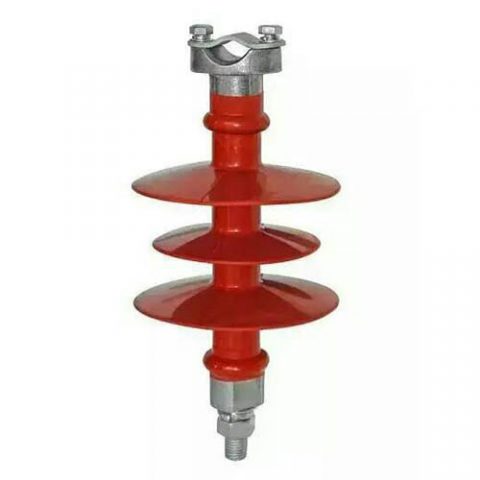
11 kV Composite Pin Insulator for Overhead Distribution Lines
11KV composite pin insulators are used on 11KV high voltage overhead power distribution lines. These pin insulators are made by FRP core, silicon rubber, and metallic fittings. On the bottom side of the fitting, it is where we call pin, the pin has a screw which is used to fix the insulator onto the cross-arm. On header fitting, it usually has a groove shape to fix conductors.