


Crimping Machine 165 for Composite Insulator Production
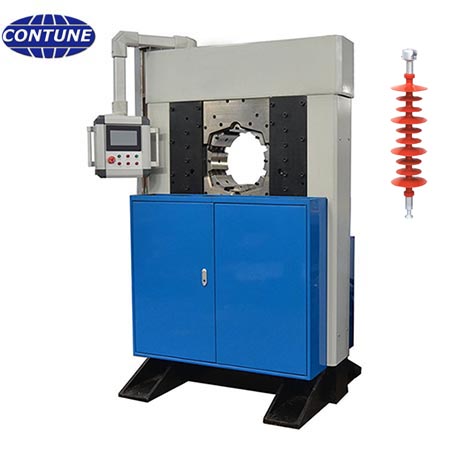
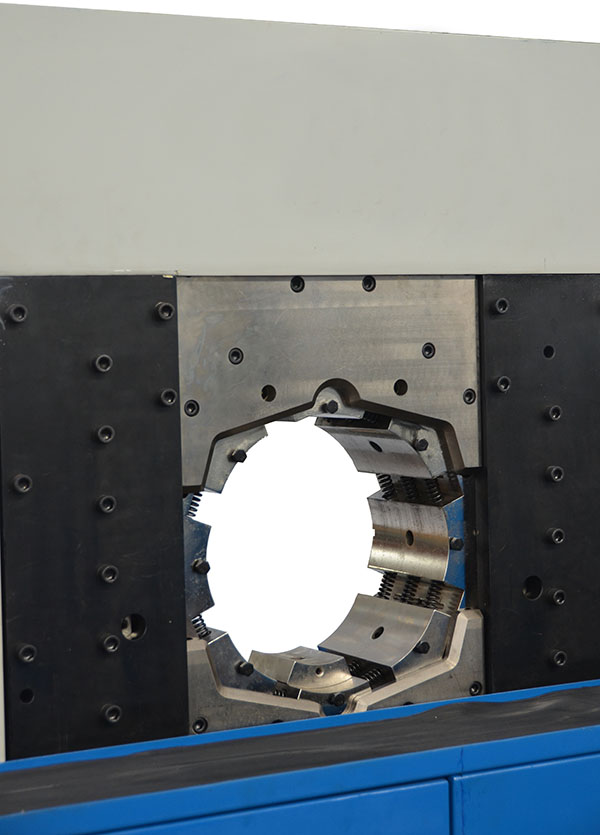

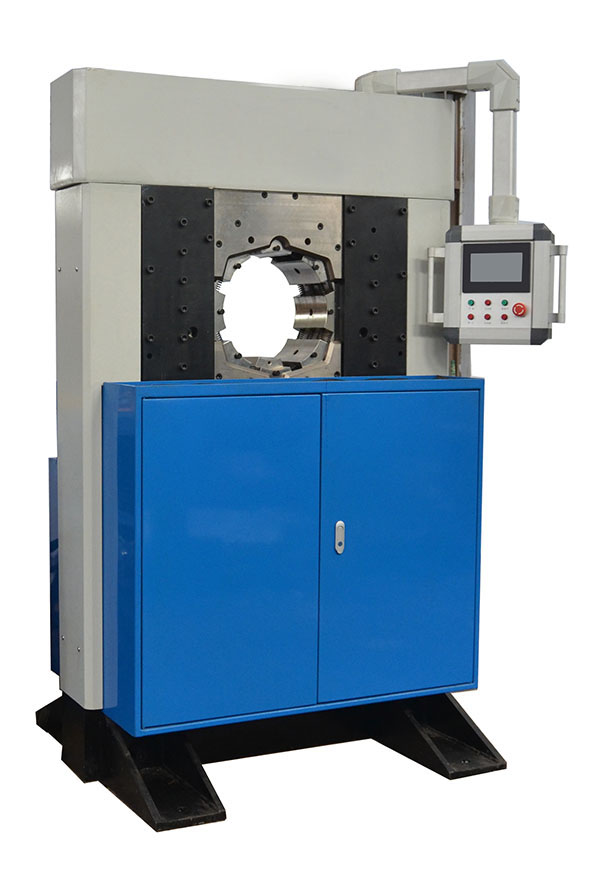
The crimping machine is applied in the production line of high voltage composite insulator (polymer insulator) to crimping metallic end fittings to FRP of the insulator. Model 165 is available for an insulator with voltage up to 800KV
Crimping machine CTCPM-165 at a glance
- Purpose: crimps the metallic end fittings onto the FRP / ECR core of a composite insulator — the essential production machine of a polymeric insulator line.
- Pressing force: 6000 kN, with a crimping range of 6.8 mm to 250 mm diameter and a maximum crimping diameter of 250 mm.
- Insulators covered: pin, post, suspension and tension (long rod) polymeric insulators from 11 kV up to 800 kV.
- Soft crimping: slow crimping with a pressure holding function and pressure set by sections — a function of CONTUNE INTERNATIONAL CO.,LTD, and the effect is most visible on insulators of high mechanical load.
- Double control: both the crimping quantity and the crimping force control the crimping quality, which gives the maximum tensile load with the minimum discreteness.
- Supply: PLC control, 380 V / 50 Hz, 7.5 kW, about 6000 kg.
1. What this machine is used for
A composite insulator is a fibre reinforced core with metal end fittings on both ends. The fitting is not screwed or glued on — it is crimped. Under high hydraulic pressure the crimping machine presses the metal fitting from all directions at once, until it is gripping the fibreglass rod tightly enough to carry the full mechanical load of the insulator.
That joint is the most critical part of the whole insulator. If it slips, the string opens; if it is crimped too hard, the rod is damaged and the unit fails later in service. The crimping machine therefore decides both the mechanical strength and the spread of the results of the finished product.
Model 165 is the machine for the upper end of the range. Compared with the 140 model it has a bigger opening diameter and a bigger pressing force, and it is built for large post insulators of high voltage level, high cantilever strength, large core diameter and large flange base, up to 800 kV.
2. What the crimped joint has to meet
- IEC 61109 – Composite suspension and tension insulators for overhead lines with a nominal voltage greater than 1000 V – Definitions, test methods and acceptance criteria. The mechanical strength of the assembly, including the end fitting attachment, is verified by the type, sample and routine tests of this standard.
- GB/T 19519-2004 – the Chinese national standard corresponding to IEC 61109:1992, MOD, with the same requirements for the end fitting attachment.
- Verification in production – the crimped joint is checked by the routine tensile test and, on the machine itself, by the crimping quantity and the crimping force of every single crimp.
3. Technical parameters
| Item | Specification |
|---|---|
| Name | Crimping machine |
| Model | CTCPM-165 |
| Manufacturer | CONTUNE INTERNATIONAL CO.,LTD |
| Max crimping diameter | 250 mm |
| Diameter difference between min opening and max opening | 150 mm |
| Crimping range | Diameter 6.8 mm to 250 mm |
| Length of min crimping module | 116 mm |
| Pressing force | 6000 kN |
| Control mode | PLC |
| Power consumption | 7.5 kW |
| Power supply | 380 V, 50 Hz |
| Weight of crimping device | About 6000 kg |
An acoustic emission system (AES) can be supplied as an option, which detects cracks appearing in the FRP / ECR rod during the crimping process: the curve on the screen shows a sudden crack in the structure, so the operator can judge the state of the rod immediately.
4. Key functions
- Soft crimping – slow crimping with a pressure holding function, and the pressure can be set by sections. This gives the best crimping quality, and the effect is particularly obvious on insulators of high mechanical load.
- Double control – both the crimping quantity and the crimping force are used to control the crimping quality, so the machine reaches the maximum tensile load with the minimum discreteness. This largely removes the effect of the different hardness of ball and socket fittings.
- Higher speed – with the optimisation of CONTUNE INTERNATIONAL CO.,LTD the machine runs faster than average, so the manufacturer gets a higher output from the same line.
- Cantilever-arm screen – a more advanced operator interface than on the 140 model.
- Optional acoustic emission system – checks the crimping quality of the fitting and shows whether cracks appear in the FRP / ECR rod during crimping.
- Wide coverage – pin, post, suspension and tension polymeric insulators from 11 kV up to 800 kV are crimped on one machine.
5. Typical applications
- Composite insulator factories – the main crimping station of the production line.
- High voltage and extra high voltage production – post insulators with a large core diameter, a large flange base and a high cantilever strength, up to 800 kV.
- Long rod and tension insulators – where the joint has to carry the full specified mechanical load with little spread.
- New production lines – the machine is the standard starting point when a manufacturer sets up polymeric insulator production.
6. Frequently asked questions
1. What does crimping mean on a composite insulator?
It is the operation that attaches the metal end fittings to the FRP / ECR core. The fitting is put over the end of the rod and the machine presses it from all directions under high hydraulic pressure until it grips the rod. Nothing is glued or threaded – the holding force comes from the crimp itself.
2. Why is this machine sometimes called a fitting pressing machine?
Some manufacturers new to the industry search for ‘fitting pressing machine’. The common and professional name in the trade is crimping machine. Both mean the same machine that presses the metal fittings onto the core.
3. What is soft crimping?
It is the crimping philosophy of CONTUNE INTERNATIONAL CO.,LTD: the machine crimps slowly, holds the pressure, and the pressure can be set separately for each section of the crimp. That keeps the rod intact while the fitting is tightened onto it, and the difference is most visible on insulators of high mechanical load.
4. Why are both the crimping quantity and the crimping force controlled?
Because using one alone leaves the result at the mercy of the fitting. Ball and socket fittings differ in hardness from batch to batch; controlling the quantity and the force together gives the maximum tensile load with the minimum discreteness, whatever the hardness of the fitting is.
5. Should I take the 165 or the 140 model?
The 165 has a bigger opening diameter, a bigger pressing force of 6000 kN against 3200 kN, and more advanced functions, and it suits bigger post insulators of higher voltage level, greater cantilever strength, bigger core diameter and bigger flange base, up to 800 kV. The 140AS is the compact machine for 11 kV to 33 kV insulators and comes with the acoustic emission system integrated.
6. Can I check the crimping quality on the machine itself?
Yes. The crimping quantity and the crimping force of every crimp are controlled and recorded. In addition, an acoustic emission system can be supplied as an option, which shows on the screen whether a crack appears in the FRP / ECR rod during crimping.
Related composite insulator production machines
For lower voltage classes the compact crimping machine CTCPM-140AS for 11-33 kV is used. The crimping quality can be monitored with the acoustic emission system for crimping, and the marking of the finished insulator is done on the laser marking machine. The complete line is listed under insulator production machines.

Insulator Crimping Machine CTCPM-140AS for Silicone Rubber Insulator Production
Crimping machine is applied in the production line of high voltage composite insulators. The model no.CTCPM-140AS is available for insulators with voltage from 11kV to 33kV, including all types of composite insulators.