


Insulator Porosity and Dye Penetration Tester for Porcelain Insulator Units
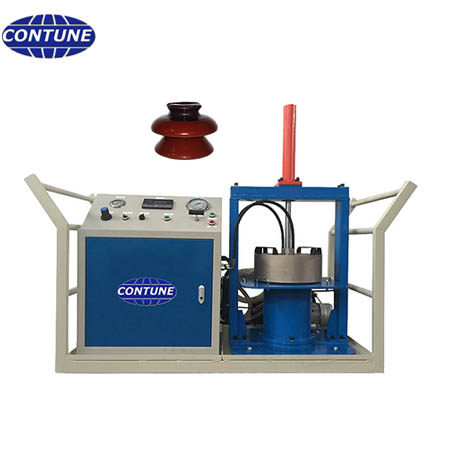
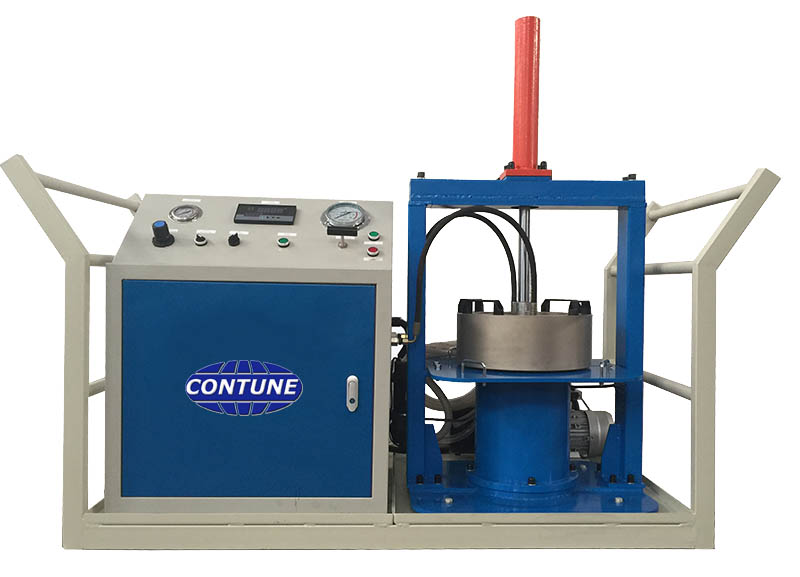
The insulator porosity test machine is to inspect the porosity property of the HV porcelain insulator under a constant high-pressure environment with dye penetration.
Porosity and dye penetration tester at a glance
- Test performed: porosity test, also called the dye penetration or magenta penetration test.
- Purpose: shows whether there are gaps, bubbles or cracks inside the ceramic material – an important quality index of a porcelain insulator.
- Method: broken porcelain pieces are placed in the test chamber and held under pressure in a magenta dye solution, so that the dye penetrates into any pores.
- Standard: GB/T 775.1-2006, equivalent to IEC 60383-1 for ceramic and glass insulator units for a.c. systems above 1000 V.
- Pressure: maximum 35 MPa, customizable up to 40 MPa; recommended working pressure 15 – 20 MPa.
- Test objects: ceramic post insulators, ceramic pin insulators and ceramic disc insulators.
1. What this machine is used for
The porosity tester tests the porosity of porcelain insulators. It is designed to show whether there is a gap, a bubble or a crack inside the ceramic material, which is an important index of the quality of a ceramic insulator, because these defects cannot be seen from the outside.
In the test the porcelain insulators are broken into pieces and put into the testing chamber, where they are held under pressure in a magenta dye solution – magenta dye added to water or alcohol – so that the dye penetrates into the ceramic pores. Because the test is a dyeing process, the porosity test is also called the magenta penetration test. Afterwards the freshly broken surfaces are examined: dye that has penetrated into the body shows that the material is porous, while a clean fracture surface shows a dense, well vitrified body.
2. Standards applied
- GB/T 775.1-2006 – Test method of insulators.
- IEC 60383-1 – Insulators for overhead lines with a nominal voltage above 1000 V, Part 1: ceramic or glass insulator units for a.c. systems – definitions, test methods and acceptance criteria. GB/T 775.1 is stated as equivalent to it.
The test pressure and the holding time are taken from the applicable standard and from the purchaser specification.
3. Technical parameters
| Item | Specification |
|---|---|
| Testing pressure | 0 – 35 MPa |
| Customized maximum pressure | Up to 40 MPa |
| Recommended working pressure | 15 – 20 MPa |
| Controlling accuracy | +2% of max pressure / -1% of min pressure |
| Pressure control mode | Manual control |
| Operating mode | Manual control |
| Time of pressure holding | At any length |
| Testing medium | Water with magenta dye (magenta solution in water or alcohol) |
| Test object | Ceramic post insulators, ceramic pin insulators, ceramic disc insulators |
The maximum pressure for testing is 35 MPa and some customized types reach 40 MPa, but the recommended running pressure is around 15 to 20 MPa, for the good of the service life and of the maintenance of the machine. Long periods at peak pressure consume the life of the inner parts.
4. Key functions
- Pressure vessel test chamber for broken porcelain pieces.
- Pressure generation and holding up to the maximum testing pressure.
- Pressure control with manual adjustment and display.
- Pressure holding for any length of time required by the standard.
- Operation with a water based magenta dye solution.
5. Typical applications
- Porcelain insulator manufacturers – quality control of ceramic post, pin and disc insulator units.
- Laboratories and research institutes – assessment of the vitrification and of the homogeneity of the ceramic body.
6. Frequently asked questions
1. What is a porosity test on a porcelain insulator?
It is a test that shows whether the ceramic material contains gaps, bubbles or cracks. It is an important quality index of a porcelain insulator, because internal defects cannot be seen from the outside.
2. Why is it also called a dye penetration test?
Because a magenta solution, made by adding magenta dye to water or alcohol, is used under pressure so that the dye penetrates into the ceramic pores. The porosity test is therefore also called the magenta penetration test.
3. How is the test carried out?
Porcelain insulators are broken into pieces and put into the testing chamber, where they are held under pressure in the dye solution. After the holding time the pieces are examined for dye that has penetrated into the body.
4. How is the result evaluated?
The freshly broken surfaces are inspected. Dye that has penetrated into the body indicates an open pore or a crack, so the material is porous; a clean fracture surface indicates a dense, well vitrified body.
5. What pressure should I use?
The maximum testing pressure is 35 MPa and some customized types reach 40 MPa, but the recommended running pressure is around 15 to 20 MPa, for the good of the service life and of the maintenance of the machine.
6. Which ceramic insulators can be tested?
Ceramic post insulators, ceramic pin insulators and ceramic disc insulators.
Related insulator test equipment
This porosity tester belongs to the mechanical test equipment for insulators range. Contune also supplies the thermal shock testing machine for the IEC 60383-1 thermal shock test and the thermal-mechanical stress testing machine for thermal-mechanical performance testing. See the full insulator testing machines catalogue for further mechanical and electrical test solutions.
Default configuration: 1 set of porosity testing machine without air pump
15800USD
Contact us for promotion coupon code of 2025!
2 Comments
Leave a Reply
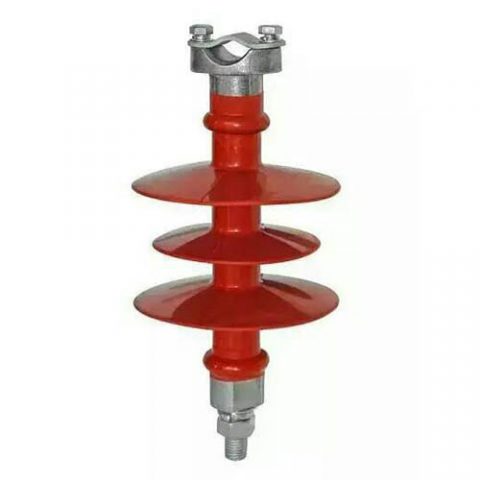
11 kV Composite Pin Insulator for Overhead Distribution Lines
11KV composite pin insulators are used on 11KV high voltage overhead power distribution lines. These pin insulators are made by FRP core, silicon rubber, and metallic fittings. On the bottom side of the fitting, it is where we call pin, the pin has a screw which is used to fix the insulator onto the cross-arm. On header fitting, it usually has a groove shape to fix conductors.
Where can I find a distributor in Brazil for this insulator test machine of porosity performance?
After exploring a few of the test facilities, we would like to have your quotation of this porosity test machine that enables 11KV porcelain insulators to be tested in Lacquer. Technical standard shall comply with DIN.