


Thermal Shock Testing Machine for Ceramic and Glass Disc Insulators
Thermal shock test for ceramic disc insulators as per IEC 60383 Clause 15.1 in heated air and cold water with temperature deviation of 50K.
Thermal shock testing machine at a glance
- Test performed: thermal shock test – pre-heating in air followed by cooling in water.
- Standard: test method of IEC 60383-1, Clause 15.1.
- Temperature difference: 50 K between the hot and the cold medium.
- Test objects: ceramic (porcelain) and glass disc insulators of overhead lines.
- Equipment: one station with automatic air pre-heating and a water tank at ambient temperature; the sample rack lowers the heated units into the water automatically.
- Tropical climates: where the water is warmer, the samples are heated to a higher temperature so that the 50 K difference is still reached.
1. What this machine is used for
The thermal shock testing machine performs the thermal shock test on ceramic and glass disc insulators: the units are pre-heated in air and then suddenly cooled in water. Ceramic and glass are brittle materials, and a sudden temperature change creates thermal stress inside the body. Any hidden weakness – an internal crack, a pore or a residual stress from firing – can make the part fail, so the test finds weak units before they are installed on a line.
The machine gives the user an all-in-one testing environment: an automatic heating function that pre-heats the disc insulators in air, and a water tank at room temperature, normally about 20 degrees Celsius, into which the units are dropped. When the target temperature is reached, for example 70 degrees Celsius, heating stops and the bracket holding the insulators goes down, so that the samples drop into the cold water.
2. Standards applied
The test method, the number of cycles and the acceptance criteria are taken from the standard and from the purchaser specification:
- IEC 60383-1, Clause 15.1 – Insulators for overhead lines with a nominal voltage above 1000 V, Part 1: ceramic or glass insulator units for a.c. systems – definitions, test methods and acceptance criteria. Clause 15.1 describes the thermal shock test.
- ANSI C29 series – applied instead of IEC where the purchaser specifies ANSI requirements.
3. Technical parameters
| Item | Specification |
|---|---|
| Test method | Pre-heating in air, then cooling in water |
| Applicable standard | IEC 60383-1, Clause 15.1 |
| Temperature difference between the two media | 50 K |
| Heating medium | Air, with automatic temperature control |
| Cooling medium | Water tank at ambient temperature, normally about 20 degrees Celsius |
| Sample handling | Motorised rack; heating stops and the rack lowers the samples into the water when the target temperature is reached |
| Test object | Ceramic (porcelain) and glass disc insulator units |
| Heating temperature | Set to give the 50 K difference against the local water temperature; higher in tropical countries |
Because the standard requires a difference of 50 K and not an absolute temperature, the heating temperature depends on the local water temperature. In tropical countries, such as India or African countries near the equator, the samples are heated to a higher temperature so that the difference between the two media still reaches 50 K.
4. Key functions
- All-in-one station: air pre-heating and the water cooling tank in one frame.
- Automatic heating of the disc insulators to the target temperature.
- Automatic lowering of the sample rack into the water tank when the target temperature is reached.
- Temperature control and display of the heating medium.
- Water tank at ambient temperature, sized for the disc insulator units under test.
5. Typical applications
- Ceramic and glass disc insulator manufacturers – quality control and type testing of insulator units.
- High voltage laboratories and research institutes – verification of the thermal behaviour of ceramic and glass material.
6. Frequently asked questions
1. What is the thermal shock test for insulators?
It is a test in which ceramic or glass disc insulators are pre-heated in air and then suddenly cooled in water. The sudden temperature change creates thermal stress inside the insulator and reveals units with hidden cracks or internal defects.
2. Why is the difference specified as 50 K and not as a fixed temperature?
IEC 60383-1 Clause 15.1 requires a temperature difference of 50 K between the heated insulator and the cooling water. Since the water temperature depends on the site, the heating temperature is set so that this 50 K difference is reached.
3. What heating temperature is needed in a hot country?
Where the ambient water is warmer, for example in tropical countries, the insulator samples have to be heated to a higher temperature so that the difference between the two media still reaches 50 K.
4. Which insulators can be tested?
The machine is designed for ceramic (porcelain) disc insulators and glass disc insulators of overhead lines.
5. How does the machine run the cycle?
The station heats the disc insulators in air automatically. When the target temperature is reached heating stops and the bracket holding the samples lowers them into the water tank at room temperature.
6. What happens after the cycle?
The units are taken out and inspected. A unit that has cracked or broken by the thermal shock has failed; intact units pass, according to the acceptance criteria of the applicable standard and of the purchaser specification.
Related insulator test equipment
This thermal shock machine belongs to the mechanical test equipment for insulators range. Contune also supplies the porosity and dye penetration tester for the porosity and dye penetration test of porcelain, and the combined electro-mechanical strength tester for combined electrical and mechanical loading of disc insulator units. See the full insulator testing machines catalogue for further mechanical and electrical test solutions.
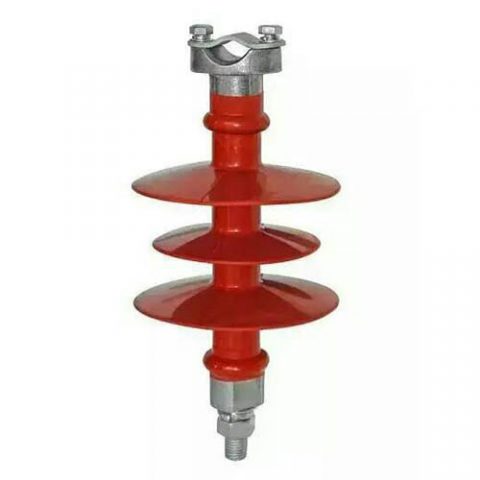
11 kV Composite Pin Insulator for Overhead Distribution Lines
11KV composite pin insulators are used on 11KV high voltage overhead power distribution lines. These pin insulators are made by FRP core, silicon rubber, and metallic fittings. On the bottom side of the fitting, it is where we call pin, the pin has a screw which is used to fix the insulator onto the cross-arm. On header fitting, it usually has a groove shape to fix conductors.