


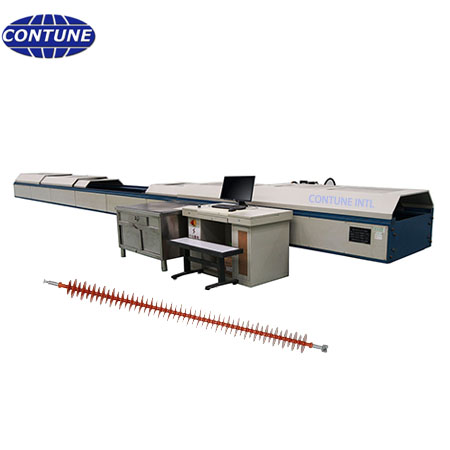
A composite insulator tensile testing machine verifies axial mechanical strength and end fitting assembly quality. It is especially important for suspension and long rod composite insulators.
Contune supplies horizontal tensile testing machines for insulators and can customize load range, fixture length and control systems.
Define load capacity and sample length
The machine must fit the maximum sample length and required tensile load. Long samples may require a horizontal layout, special foundation and safe handling space.
Buyers should include future product sizes when selecting the frame and actuator capacity.
Fixture design matters
Fixtures must match the end fittings and avoid bending or side loading during the tensile test. Poor fixtures can cause invalid results even when the machine is accurate.
Before quotation, provide fitting drawings and sample dimensions.
Controls and data output
A practical tensile tester should provide stable load control, clear readings, data recording and report output. Calibration and sensor accuracy should be discussed before purchase.
For customer acceptance, test reports may need specific units, curves or export formats.
Safety and installation
High-load tensile testing stores significant energy. Safety guards, emergency stop, controlled loading and clear operator procedures are important.
Installation planning should include floor space, power, foundation and lifting equipment.
FAQ
Why use a horizontal tensile tester?
Long composite insulators are easier and safer to test in a horizontal layout.
Can the same tensile machine test different insulator lengths?
Yes, if the frame, stroke and fixtures are designed for the required range.
What should be sent before quotation?
Send sample length, rated tensile load, end fitting drawings, required standard and data output needs.
Need help selecting equipment? Contact Contune with your insulator type, voltage class, load range, required tests and target capacity.