


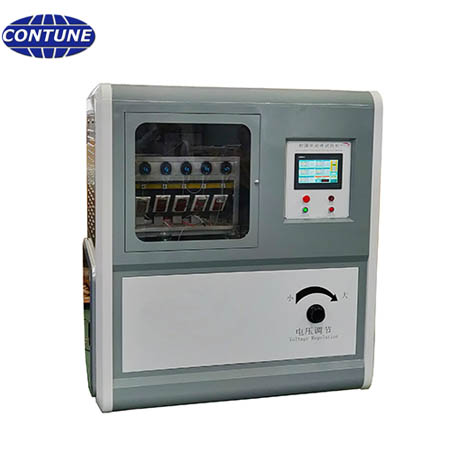
A composite insulator test laboratory should be planned from the full product risk chain: material, housing, end fitting, mechanical load, electrical withstand and long-duration performance.
The right equipment list depends on whether the lab supports incoming material inspection, routine factory tests, product development, customer acceptance or certification support.
Source facts used
- IEC 60587 tracking and erosion tester supports silicone rubber material evaluation.
- 150kV/50kVA AC system is positioned for 33kV glass/porcelain/polymer insulators.
- 250kV/100kVA AC system is positioned for 11-66kV insulators.
- Thermal-mechanical testers use four 24-hour heating/cooling cycles and sustained tensile load.
- Horizontal tensile tester brochure lists 1000kN load, 600mm piston stroke and 0-200mm/min loading speed.
- Large cantilever/torsion machine example lists 300kN tensile, 20kN cantilever and 5kN·m torsion.
Material and housing tests
For silicone rubber, IEC 60587 tracking and erosion testing helps evaluate resistance under voltage and liquid contamination.
This is not a finished-insulator test, but it supports material screening and formulation control.
Electrical product tests
AC voltage test systems support dry/wet flashover, puncture and power frequency voltage tests depending on the product and standard.
The choice between 150kV/50kVA and 250kV/100kVA should follow voltage class, test voltage and future expansion.
Mechanical and long-duration tests
Horizontal tensile machines, cantilever/torsion systems and thermal-mechanical testers cover different mechanical risks.
Buyers should not assume one universal machine can replace all fixtures and load directions.
Buyer checklist
- Material test scope
- Voltage class range
- Routine vs type tests
- Mechanical load direction
- Sample length and fixtures
- Reports and safety layout
FAQ
Should a new factory buy every tester at once?
Not always. Prioritize routine quality control and customer-required acceptance tests, then phase advanced type-test equipment.
What is the best starting point?
Start from product range, standards, customer requirements and whether tests will be done in-house or outsourced.
Need a practical recommendation? Send product drawings, voltage class, test standard, sample size and destination country through the Contune contact page.