


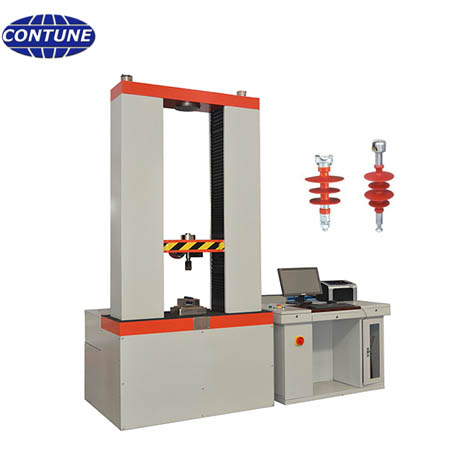
An insulator testing laboratory setup for manufacturers should support production quality control, customer acceptance and product development.
The equipment list should be built from actual product range and customer standards, not copied from another factory without review.
Separate routine and type tests
Routine production checks may be different from design or type tests.
This distinction helps buyers avoid over-investing in rarely used equipment while still meeting customer requirements.
Choose core mechanical equipment
Tensile, cantilever, torsion and bending test equipment are common for high-voltage insulators and fittings.
The testing machine category shows typical machine families.
Plan electrical and environmental tests
Power frequency, tracking and erosion, salt fog and thermo-mechanical tests may be needed depending on the product and market.
Safety space, grounding and operator protection are part of the laboratory design.
Connect test results to production
Testing should feed back into crimping, molding, rod preparation and inspection.
A lab is most valuable when it helps reduce defects and improve repeatability.
Buyer checklist
- Routine test list
- Type test list
- Sample dimensions
- Safety layout
- Report format
FAQ
Should every manufacturer build a full laboratory immediately?
Not always. The first phase should match real customer and production requirements.
Can the laboratory be expanded later?
Yes, if space, utilities and equipment interfaces are planned early.
Next step: send Contune your product range, drawings, standards, target capacity and destination country through the contact page. The engineering team can recommend a practical machine package before quotation.