


33 kV Composite Pin Insulators for Overhead Distribution Lines
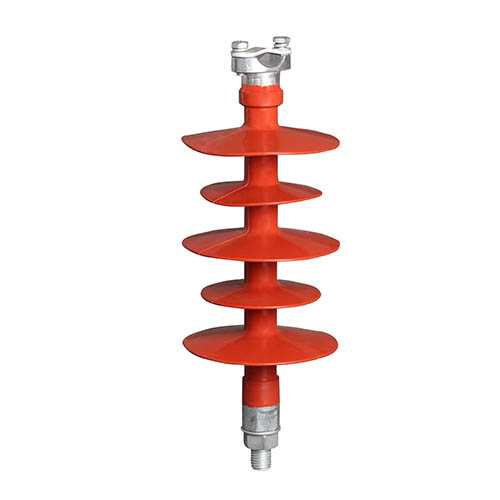
33KV composite pin insulators are used on 33KV high voltage overhead power distribution lines. These pin insulators are made by FRP core, silicon rubber, and metallic fittings. On the bottom side of the fitting, it is where we call pin, the pin has a screw which is used to fix the insulator onto the cross-arm. On header fitting, it usually has a groove shape to fix conductors.
33 kV composite pin insulator at a glance
- Application: supports and insulates the conductor on 33 kV overhead distribution and sub-transmission lines.
- Construction: fibre reinforced plastic core, silicone rubber housing with sheds, and a metal pin fitting.
- Rated voltage: 33 kV.
- Rated mechanical bending load: 10 kN or 12.5 kN.
- Structure height: 406 mm to 425 mm; minimum creepage distance 940 mm to 1200 mm.
- Electrical ratings: lightning impulse withstand voltage 200 kV to 230 kV peak; power frequency 1 min wet withstand voltage 95 kV.
1. What this insulator is used for
A composite pin insulator carries the conductor on a distribution line and holds it at a fixed distance above the earthed cross arm. It consists of a fibre reinforced core, a silicone rubber housing with sheds, and the metal fitting that forms the pin. Compared with a porcelain pin insulator it is lighter, it resists vandalism and impact damage, and it performs better on polluted coastal and industrial routes, which is why composite pin types are widely used on 11 kV and 33 kV distribution networks.
The FPQ-33 series covers the 33 kV class, which is a sub-transmission voltage in many networks and a distribution voltage in others. Because the voltage is three times higher than 11 kV, the insulator is taller, the arc distance and the creepage distance are roughly three times longer, and the impulse withstand rating is roughly double. Two models are supplied, at 10 kN and 12.5 kN rated bending load, with creepage distances of 940 mm and 1200 mm so that a polluted route can be fitted with the longer leakage path.
2. Standards applied
- IEC 61109 – Composite suspension and tension insulators for overhead lines with a nominal voltage above 1000 V: definitions, test methods and acceptance criteria.
- IEC 61952 – Composite line post insulators for overhead lines with a nominal voltage above 1000 V, which covers the pin and post types of this construction.
- GB/T 19519 – the Chinese national specification for composite insulators for a.c. overhead lines.
- ANSI classes – applied instead of the IEC classes where the purchaser specifies them.
3. Technical parameters
Main technical parameters of the 33 kV composite pin insulator range:
| Product model | Rated voltage (kV) | Rated mechanical bending load (kN) | Structure height H (mm) | Minimum arc distance Li (mm) | Minimum creepage distance Lc (mm) | Shed diameter D (mm) | Lightning impulse withstand voltage, peak (kV) | Power frequency 1 min wet withstand voltage (kV) |
|---|---|---|---|---|---|---|---|---|
| FPQ-33/10 | 33 | 10 | 406 | 280 | 940 | 122 / 92 | 200 | 95 |
| FPQ-33/12.5 | 33 | 12.5 | 425 | 320 | 1200 | 122 / 92 | 230 | 95 |
Construction and service conditions of the composite pin insulator range:
- Whole injection moulding of the silicone rubber housing, with the end fitting crimped onto the glass-fibre core by a compression process.
- Sheath thickness 5 mm or more and of uniform thickness, in line with the IEC requirements for the housing.
- Service conditions: ambient temperature -40 degrees Celsius to +40 degrees Celsius, altitude up to 3000 m, wind velocity up to 35 m/s, ice thickness up to 10 mm, seismic intensity up to 8 degrees.
- Tested to the requirements of IEC 61109 and IEC 61952 and to the Chinese national specification GB/T 19519; the ANSI classes are applied where the purchaser specifies them.
- Corona rings are fitted on the higher voltage classes where the system voltage requires them.
- Manufactured to the customer’s requirement where a project needs a different height, creepage distance or fitting.
4. Key features
- Light weight compared with the porcelain equivalent, which reduces the load on the cross arm and simplifies installation on a 33 kV structure.
- Long creepage distance of 940 mm or 1200 mm for polluted, coastal and industrial routes.
- Hydrophobic silicone rubber housing, so performance under wetting and pollution is maintained without cleaning.
- Uniform sheath of 5 mm or more over the core, protecting the interface against moisture ingress.
- Resistance to impact and to vandalism.
- Supplied to the customer’s requirement where the project needs a different height, creepage distance or fitting.
5. Typical applications
- 33 kV distribution and sub-transmission lines – rural and interurban feeders.
- Polluted, coastal and industrial routes – where the 1200 mm creepage model is specified.
- Replacement of porcelain pin insulators on existing 33 kV lines.
- Utility and contractor projects – new builds, reinforcement and rural electrification.
6. Frequently asked questions
1. How does the 33 kV pin insulator differ from the 11 kV one?
It is taller, with a structure height of 406 or 425 mm against 280 to 320 mm, and it has a much longer arc and creepage distance – 280 or 320 mm and 940 or 1200 mm – because the electrical stress is three times higher. The impulse withstand rating is 200 or 230 kV peak against 95 to 105 kV.
2. Which creepage distance should I specify?
940 mm for a normal environment and 1200 mm for a polluted, coastal or industrial route. The choice is made from the site pollution severity, in the same way as for any outdoor insulator.
3. Is a corona ring needed?
Corona rings are fitted on the higher voltage classes where the system voltage requires them, which is normally from 220 kV upwards. On a 33 kV line the insulator is supplied without one unless the project specifies it.
4. Can the insulator be produced to my own drawing?
Yes. The range is produced to the customer’s requirement where a project needs a different height, creepage distance, shed profile or end fitting.
5. What tests are carried out on the insulator?
The range is produced and tested to IEC 61109 and IEC 61952 and to GB/T 19519, which cover the mechanical, electrical and material tests, including the interface and the water diffusion test on the core.
6. Do you supply the lower distribution class as well?
Yes, the 11 kV composite pin insulator is supplied in the same construction, with bending loads of 5 kN, 10 kN and 12.5 kN.
Related composite insulator products
The lower distribution class is the 11 kV composite pin insulator. The core and the housing material are the FRP / ECR core rod for composite insulators and the silicone rubber material for polymer insulators, and the machines that produce them are listed under insulator production machines.
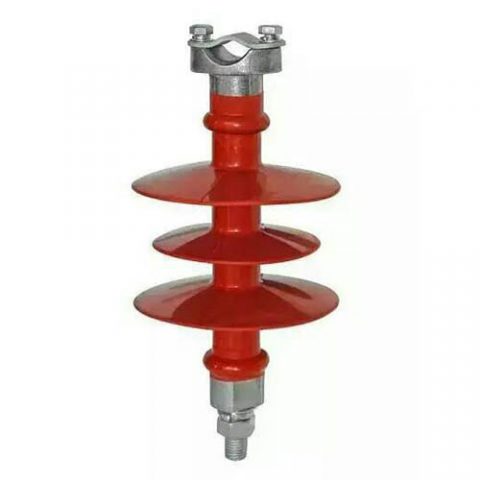
11 kV Composite Pin Insulator for Overhead Distribution Lines
11KV composite pin insulators are used on 11KV high voltage overhead power distribution lines. These pin insulators are made by FRP core, silicon rubber, and metallic fittings. On the bottom side of the fitting, it is where we call pin, the pin has a screw which is used to fix the insulator onto the cross-arm. On header fitting, it usually has a groove shape to fix conductors.