


Insulators Testing Machine for Cantilever & Torsion Test
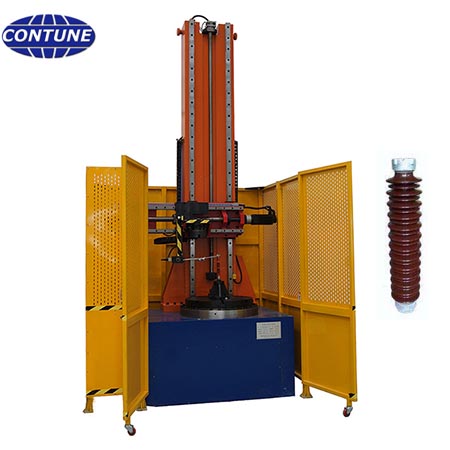
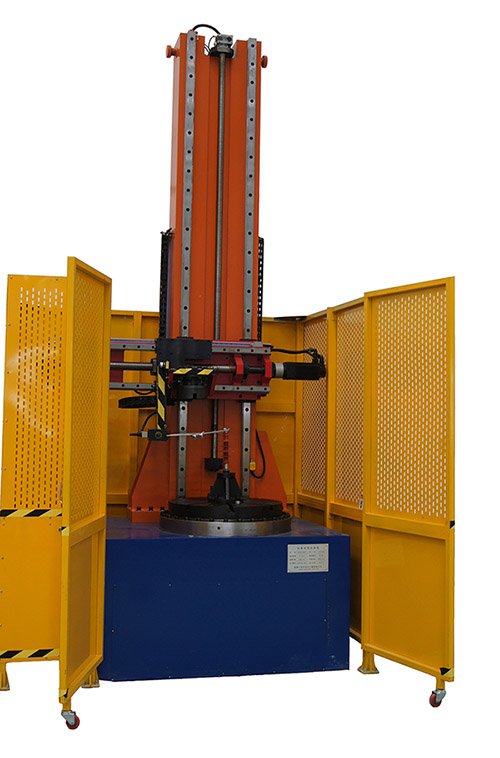
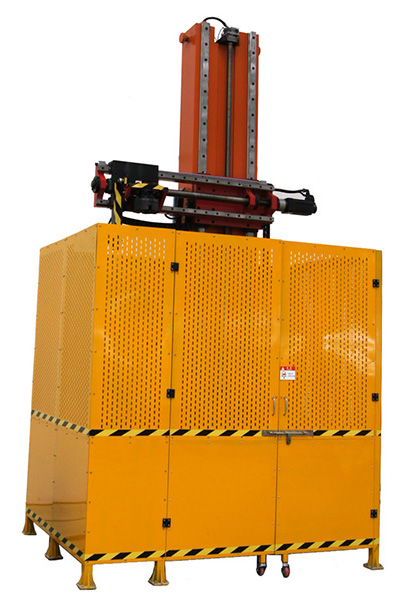
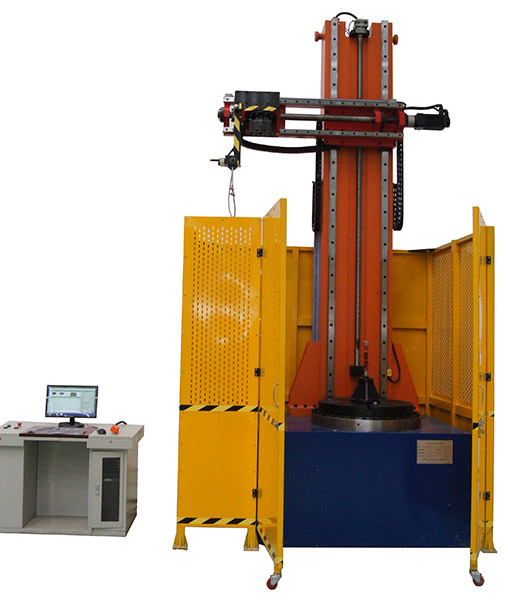
Cantilever & torsion test equipment is used for the mechanical bending test and the torsion test of post insulators according to the test methods and acceptance criteria of technical standard IEC 61109 and IEC 60383.
Cantilever and torsion testing machine at a glance
- Tests performed: cantilever (bending) test and torsion test in one machine.
- Test objects: composite post type insulators, composite pin type insulators, ceramic post type insulators and ceramic pin type insulators.
- Standards: test methods and acceptance criteria of IEC 61109 and IEC 60383-1.
- Capacity: maximum testing force 50 kN, maximum torque 10 kN.m.
- Accuracy: testing force better than ±1%, torsion ±1%, torsion angle measured to better than 0.1 degree.
- Structure: vertical structure for easy installation and assembly, reproducing the real service arrangement of a post insulator in a substation or on a line.
1. What this machine is used for
This test machine is mainly applied to perform the cantilever (bending) test and the torsion test of post insulators, including composite post type insulators, composite pin type insulators, ceramic post type insulators and ceramic pin type insulators.
It is a multi-functional machine: both the cantilever test and the torsion test are done on the same frame. The vertical structure makes installation and assembly of the specimen easy and reproduces the real service arrangement of a post insulator, either in a power substation or on an overhead transmission line.
The machine is composed of a main body, a measuring system and a computer controlled data processing system. Under software control the test runs smoothly, with accurate data and the curve drawn automatically; results are saved and printed. A servo motor in the loading system lets the machine run the preset programme continuously, so the user only has to mount the specimen.
2. Standards applied
The load level, the loading rate and the acceptance criteria are taken from the standard that applies to the insulator family being tested:
- IEC 61109 – Composite suspension and tension insulators for overhead lines with a nominal voltage above 1000 V.
- IEC 60383-1 – Insulators for overhead lines with a nominal voltage above 1000 V, Part 1: ceramic or glass insulator units for a.c. systems – definitions, test methods and acceptance criteria.
- ANSI C29 series – applied instead of IEC where the purchaser specifies ANSI requirements.
On this machine the cantilever and the torsion test are performed as sample tests, which is how manufacturers verify the consistency of production.
3. Technical parameters
| Item | Specification |
|---|---|
| Max testing force | 50 kN |
| Testing range | 1% – 100% |
| Testing force accuracy | Better than ±1%, constant speed control of the force |
| Pressure holding accuracy | ±1% of the set value |
| Control range of force | 2% – 100% FS, at a constant speed of 0.1% – 100% FS/min |
| Bending test | Can be done in 4 directions |
| Max torque | 10 kN.m |
| Torsion test accuracy | ±1% |
| Measuring accuracy of the torsion angle | Better than 0.1 degree |
| Rotatable calibration | No restriction |
| Rotatable angle | 4 directions |
| Type of test | Sample test |
Two types are available, vertical and horizontal. The vertical type is used more by insulator manufacturers and electrical laboratories because it is convenient for high voltage insulators below 66 kV with a section length below 1.5 metres. For long rod insulators, such as 400 kV suspension or tension insulators whose section length can be 3 metres or more, the horizontal type is recommended, because the specimen is too long to be mounted vertically. Both the type and the testing length are customizable.
4. Key functions
- Cantilever (bending) test and torsion test on the same machine.
- Automatic monitoring of the testing force, of the loading speed and of the peak force holding.
- Servo motor loading, so the machine runs the preset programme continuously after the specimen is mounted.
- Automatic curve drawing, result storage, and recall and printing of the results.
- Overload protection and deflection protection during the test.
- Bending in four directions and torsion in four directions, so the specimen does not have to be re-mounted.
5. Typical applications
- Composite insulator manufacturers – sample testing of composite post and pin type insulators.
- Ceramic insulator manufacturers – sample testing of ceramic post and pin type insulators.
- Electrical laboratories and research institutes – verification of the mechanical rating of post insulators used in substations or on overhead lines.
6. Frequently asked questions
1. What is a cantilever and torsion testing machine?
It is a testing machine that applies a bending moment (the cantilever test) and a torque (the torsion test) to post and pin insulators, in order to measure the mechanical strength of the insulator under the loads it sees in service.
2. Which insulators can be tested?
Composite post type insulators, composite pin type insulators, ceramic post type insulators and ceramic pin type insulators.
3. Which standards are applied?
The test methods and acceptance criteria of IEC 61109 and IEC 60383-1, depending on the insulator family being tested, or the ANSI C29 series where the purchaser specifies it.
4. What are the capacities and the accuracy?
Maximum testing force 50 kN over a measuring range of 1% to 100%, with an accuracy better than ±1%, and maximum torque 10 kN.m with a torsion accuracy of ±1% and a torsion angle measured to better than 0.1 degree.
5. Should I choose the vertical or the horizontal type?
The vertical type is the usual choice for insulators below 66 kV with a section length below 1.5 metres. For long rod insulators such as 400 kV suspension or tension insulators, whose section length can reach 3 metres or more, the horizontal type is recommended because the specimen is too long to be mounted vertically.
6. Can the machine be customized to our own insulators?
Yes. To suit different section lengths of post insulators, both the type and the testing length of the machine are customizable for each user.
Related insulator test equipment
This cantilever and torsion tester belongs to the mechanical test equipment for insulators range. Contune also supplies the insulator tensile testing machine for long rod insulators, cables and fittings, and the post insulator dimensional deviation inspection platform for dimensional checks on post insulators. See the full insulator testing machines catalogue for further mechanical and electrical test solutions.
2 Comments
Leave a Reply
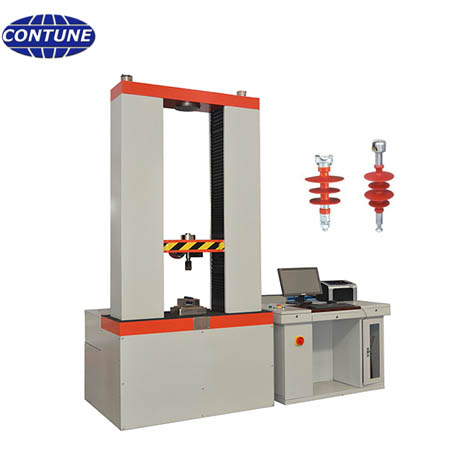
Insulator Test Machine of Tension & Cantilever
This equipment is applied to mechanical tensile and bending (cantilever) tests of insulators below 36KV with section length less than 1m. It's an economic test solution for the manufacturer of 11/33kV insulators.
Hi my name is Kartik Kulkarni and I am working in ERDA. We are in to testing field. We test different type of T&D components and insulator is one of them. Recently we have planned to procure torsion test machine for insulator.
I have check your website and found that you are dealing with such type of instruments.
We would like in get more information about torsion test machine.
Please send us catalog of the same.
Regards,
Kartik.
Hello Sir,
We need torque test for our 132KV sation post insulator,please send catalog of test machine.