


Insulator Test Machine of Tension & Cantilever
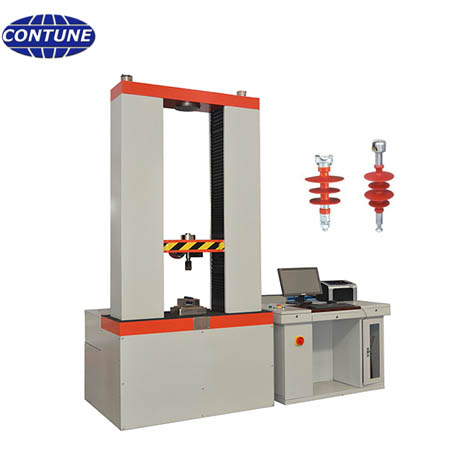
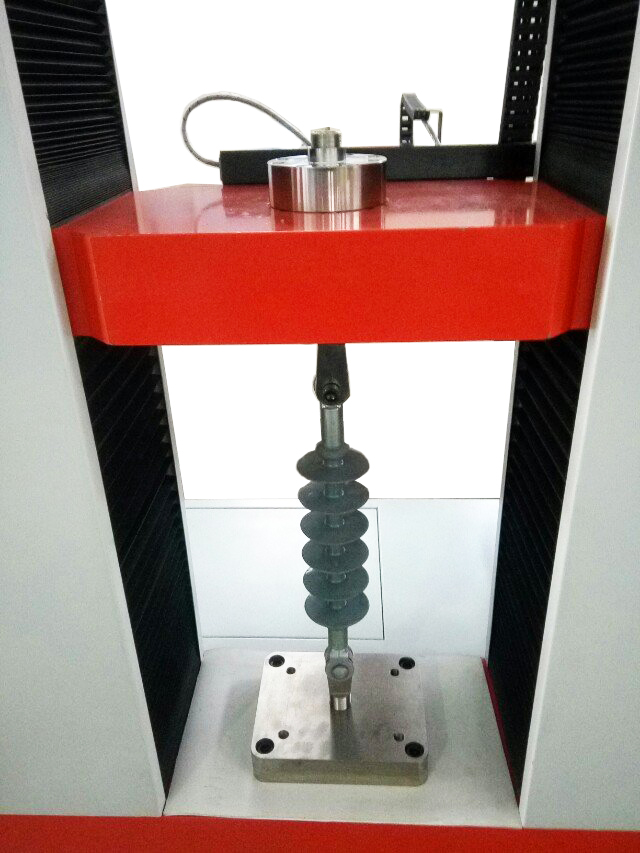
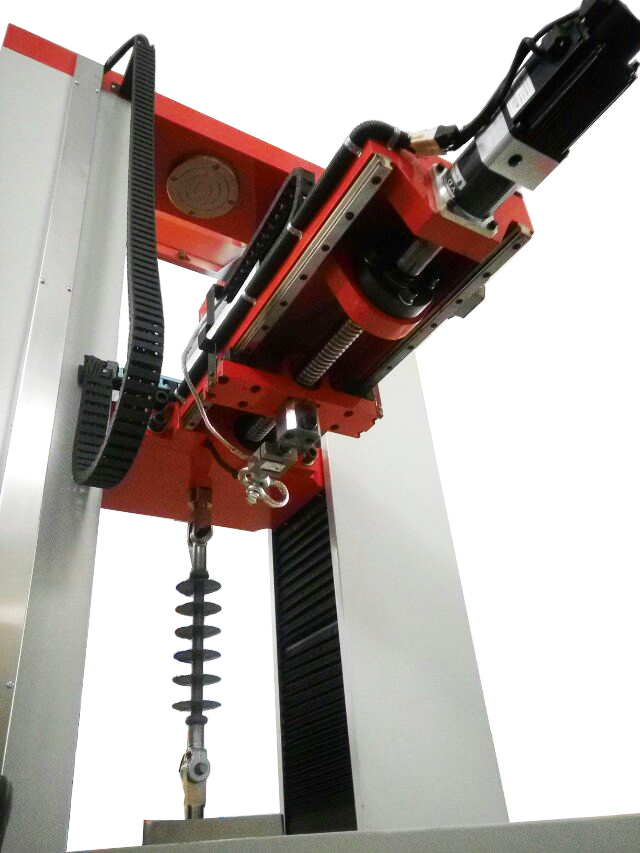
This equipment is applied to mechanical tensile and bending (cantilever) tests of insulators below 36KV with section length less than 1m. It's an economic test solution for the manufacturer of 11/33kV insulators.
Insulator tensile and cantilever testing machine at a glance
- Purpose: applies a tensile load and a cantilever (bending) load to insulators for distribution and sub-transmission voltages, and records the load and the deflection.
- Tests covered: mechanical tensile load test, tensile withstand test, tensile breaking test, cantilever withstand test and cantilever breaking load test.
- Test objects: composite pin insulators, composite tension and suspension insulators, ceramic pin insulators, ceramic disc insulators and glass disc insulators below 36 kV.
- Standards: the mechanical test methods and acceptance criteria of IEC 60383-1, IEC 61109, GB/T 1001.1 and GB/T 19443, or the ANSI, DIN and BS requirements where specified.
- Ratings: 100 kN tensile / 20 kN cantilever as standard; 200 kN tensile on the larger frame. Valid tensile space up to 1000 mm, cantilever stroke 200 mm.
- Users: manufacturers of 11 kV and 33 kV insulators, and the laboratories that inspect them.
1. What this machine is used for
This machine performs two mechanical tests on one frame. In the tensile test the insulator is mounted vertically and pulled, which is the load a tension or suspension insulator carries in service. In the cantilever test a pin or post insulator is fixed by its metal pin on the test platform and a moving beam pulls the top horizontally, which reproduces the bending load that a pin or post insulator carries on a line or in a station.
It is designed for insulators below 36 kV with a section length under 1 m, which covers the 11 kV and 33 kV distribution classes. Because both tests are needed in the same factory but neither requires a large frame, the combined machine is an economical alternative to buying a tensile machine and a cantilever machine separately.
The operator defines the procedure in the software: a withstand test holds a specified load for a specified time, while a breaking test keeps loading until the sample fails and records the breaking load. Load, deflection and displacement are measured and the test report is stored, printed and exported.
2. Standards applied
The test methods and the acceptance criteria come from the standard that applies to the insulator being tested:
- IEC 60383-1 – Insulators for overhead lines with a nominal voltage above 1000 V, Part 1: ceramic or glass insulator units for a.c. systems. Defines the mechanical tests and the sample and routine test plans for ceramic and glass units.
- IEC 61109 – Composite suspension and tension insulators for overhead lines with a nominal voltage above 1000 V. Defines the mechanical tests for composite insulators, including the verification of the specified mechanical load.
- GB/T 1001.1 – the Chinese national specification for porcelain or glass insulators on a.c. systems above 1000 V.
- GB/T 19443 – the Chinese national specification for porcelain or glass insulators for d.c. systems above 1000 V.
- ANSI, DIN and BS series – applied instead of IEC where the purchaser specifies them; the same tensile and cantilever tests are then run with the loads and procedure of that standard.
3. Technical parameters
Two frame ratings are supplied, both servo controlled. The figures below are the standard configuration; the valid tensile space and the fittings are adapted to the samples.
| Item | CT-TBT100 | CT-TBT200 |
|---|---|---|
| Max tensile load | 100 kN | 200 kN |
| Max cantilever load | 20 kN | 20 kN |
| Cantilever stroke | 200 mm | 200 mm |
| Valid range of measured load | 5% – 100% FS | 5% – 100% FS |
| Accuracy of load measurement | Better than ±1% | Better than ±1% |
| Testing speed | 0 – 400 mm/min | 0 – 400 mm/min |
| Accuracy of deformation measurement | Better than 1% | Better than 1% |
| Accuracy of displacement measurement | Better than 1% | Better than 1% |
| Valid tensile space | 0 – 1000 mm (customisable) | 0 – 1000 mm (customisable) |
| Valid compression space | 1000 mm (customisable) | 1000 mm (customisable) |
| Width of frame | 500 mm | 500 mm |
| Main body (L x W x H) | 1150 x 1300 x 2400 mm | 1150 x 1300 x 2400 mm |
| Power consumption | 3 kW | 3 kW |
| Power supply | 220 V single phase or 380 V three phase, 50 Hz (adaptable to the local supply) | 220 V single phase or 380 V three phase, 50 Hz (adaptable to the local supply) |
Standard fittings: two sets of interchangeable couplings, ball and socket, and tongue and clevis, so that samples of different mechanical rating and different dimensions can be mounted without modifying the frame. Control is from a computer; the load is applied by a servo drive, which is what gives the machine its speed and its repeatability.
4. Key functions
- Tensile load test and cantilever (bending) load test on one frame.
- Withstand mode (hold the specified load for the specified time) and breaking mode (load to failure and record the breaking load).
- Servo control with stepless speed setting, 0 – 400 mm/min.
- Live display of load, deformation and displacement, with the load path shown on screen during the test.
- Programmable test procedure: target load, loading speed, holding time and judging conditions are set in the software.
- Manual control for mounting samples, and automatic control for running the test.
- Test report generated, saved, printed and exported; the report template can carry the company title.
- Load and displacement limits with automatic protection.
5. Typical applications
- Manufacturers of 11 kV and 33 kV insulators – mechanical sample tests and routine tests on pin, tension and suspension types.
- Composite insulator factories – tensile verification of the specified mechanical load and cantilever breaking load of pin and post types.
- Ceramic and glass insulator factories – electromechanical and mechanical withstand tests on disc and pin units.
- Third party laboratories – verification testing and incoming inspection for utility purchasers.
6. Frequently asked questions
1. Which insulators can be tested on this machine?
Composite pin insulators, composite tension insulators, composite suspension insulators, ceramic pin insulators, ceramic disc insulators and glass disc insulators, up to 36 kV and with a section length below 1 m.
2. What is the difference between a withstand test and a breaking test?
In a withstand test the specified load is applied and held for the specified time, and the sample passes if it survives without damage. In a breaking test the load is increased until the sample fails, and the failure load is recorded; this is the test used to determine or verify the rated mechanical load.
3. Why is a cantilever test required on pin insulators?
A pin insulator carries its load as a bending moment at the pin, not as a straight pull. The cantilever breaking load is therefore the mechanical index that describes how that insulator performs in service, and it is the figure the standards require to be verified.
4. How is this machine different from a cantilever and torsion testing machine?
This machine does tensile and cantilever tests on distribution class insulators. A cantilever and torsion machine adds a torsion station and is built for the larger post and hollow insulators used in substations, so it has a much higher frame and a rotating base.
5. Can the test procedure be programmed?
Yes. Target load, loading speed, holding time and the judging conditions are defined in the software, so the same programme can be recalled for every sample of a production batch.
6. Is the tensile space fixed at 1000 mm?
No. 1000 mm is the standard valid tensile space and the standard valid compression space, and both are customised to the sample length when required.
Related insulator testing machines
This tensile and cantilever machine belongs to the electrical test equipment for insulators range. For larger post and hollow insulators see the cantilever and torsion testing machine, and for long rod and string insulators see the horizontal tensile testing machine. The full insulator testing machines catalogue also covers electrical, thermal and material test equipment.
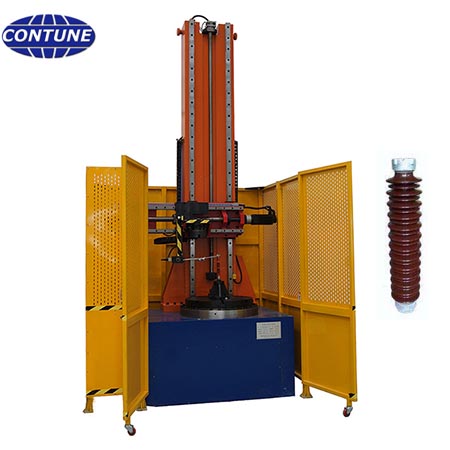
Insulators Testing Machine for Cantilever & Torsion Test
Cantilever & torsion test equipment is used for the mechanical bending test and the torsion test of post insulators according to the test methods and acceptance criteria of technical standard IEC 61109 and IEC 60383.