


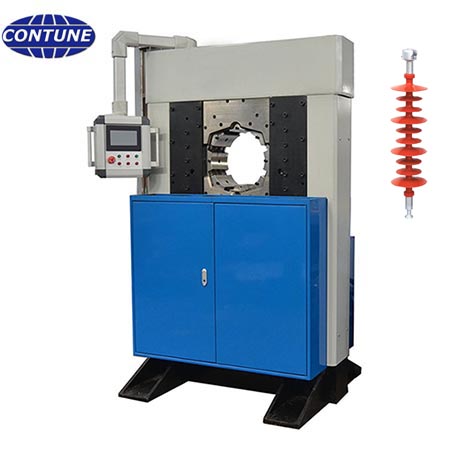
Hollow core composite insulators have different production requirements from solid long rod products. Tube dimensions, flange assembly, silicone housing, sealing and handling must be considered together.
Buyers should define product drawings and performance requirements before selecting molding and assembly equipment.
Start from tube and flange design
Tube diameter, length, wall thickness and flange connection affect equipment size and fixture design.
The assembly method should support sealing reliability and dimensional consistency.
Review silicone housing production
The molding method should match product diameter, shed profile and production equipment volume.
Discuss mold structure and {rubber injection molding machine} capacity together.
Plan handling and protection
Large hollow core products require stable supports, lifting points and careful movement.
Surface protection is important before and after molding.
Define inspection and testing
Testing may include dimensional checks, mechanical requirements, sealing-related checks and customer-specific verification.
Connect the product plan with suitable {testing equipment}.
Buyer checklist
- Tube diameter and length
- Flange design
- Shed profile
- Molding method
- Handling supports
- Inspection and test scope
FAQ
Are hollow core machines the same as long rod machines?
Some equipment may overlap, but tube diameter, flange assembly and handling often require different planning.
What data should be sent first?
Send drawings, tube dimensions, flange details, shed profile and test requirements.
Discuss your project: Send drawings, test standards, voltage class, expected capacity and destination country through the Contune contact page.