


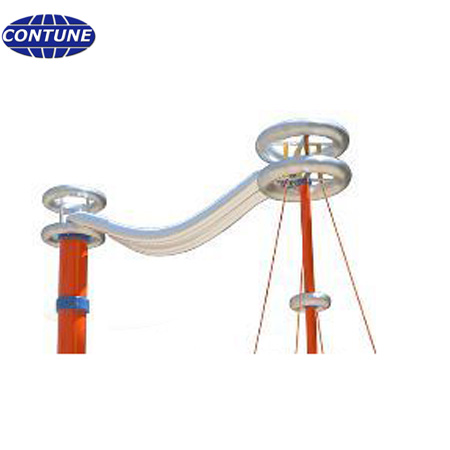
An AC high voltage test transformer is not selected by voltage alone. For insulator testing, the useful specification combines the voltage level, apparent power, output current, duty requirement, divider accuracy and protection method.
Contune sample specifications for 150kV/50kVA and 250kV/100kVA systems show how buyers can turn an 11kV, 33kV or 66kV insulator requirement into a practical test system scope instead of a vague request for a high voltage source.
Source facts used
- 150kV/50kVA system for 33kV glass, porcelain and polymer insulators.
- 250kV/100kVA system for 11kV to 66kV glass, porcelain and polymer insulators.
- IEC 60060-1:2010 and IEC 60060-2:2010 are listed as applied standards.
- Both examples use single-phase 50Hz output and a 1000:1 voltage turns ratio.
- The 150kV system lists 0.333A output current; the 250kV system lists 0.4A output current.
Start from the test object, not the transformer catalogue
A buyer should first define insulator type, nominal voltage, dry or wet test condition, required withstand or flashover level, and the expected sample capacitance. A 33kV distribution insulator laboratory normally has a different margin requirement from a 66kV station insulator laboratory.
The transformer kVA rating must support the target voltage and current without unstable output during the test. In Contune examples, the 150kV and 250kV systems are paired with protective resistors and capacitive dividers, so the quotation is a test system rather than only a transformer.
Why kVA and output current matter
A high voltage transformer with the correct voltage but too little output current can struggle during wet flashover, polluted surface testing or larger-capacitance samples. The output current also affects protection settings and the practical test duration.
For procurement documents, it is better to state both target voltage and required rated capacity. A request such as “250kV/100kVA AC test system for 11kV to 66kV insulators” is easier to engineer than “high voltage tester for insulators”.
System items buyers should include
The core system normally includes a voltage regulator, AC test transformer, protective resistor, capacitive voltage divider, control and measuring console, and safety interlocks. For high voltage laboratories, layout, grounding and clearance planning are part of the equipment decision.
Related planning topics are covered in Contune guides for power frequency test equipment and insulator testing laboratory setup.
Buyer checklist
- Insulator type and rated voltage class
- Dry, wet, flashover, withstand or puncture test requirement
- Target maximum voltage and required kVA
- IEC or customer standard to follow
- Available power supply and laboratory clearance
- Preferred reporting and protection functions
FAQ
Can one AC test transformer cover several voltage classes?
Yes, if the maximum voltage, kVA, current and laboratory safety margin are planned correctly. Many laboratories buy one system that covers several product families.
Is IEC 60060 relevant for insulator testing systems?
Yes. IEC 60060 defines high-voltage test techniques and measurement requirements that affect transformer, divider and control system selection.
Need help matching the specification? Send the sample drawing, voltage class, test standard, expected capacity and destination country through the Contune contact page.