


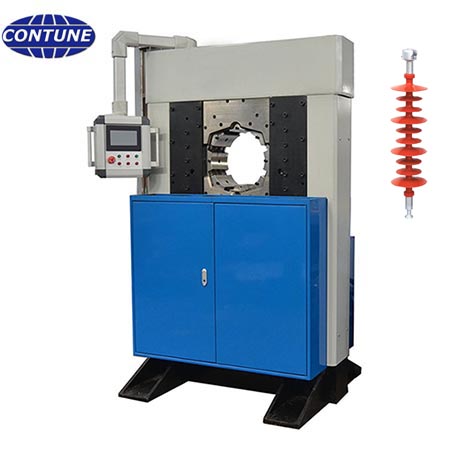
Composite insulator crimping is a quality-critical production step because the end fitting must grip the FRP rod without hidden damage. A good machine should do more than reach a pressure number; it should record the process that produced the joint.
Contune CTCPM series material highlights acoustic emission monitoring, pressure, displacement and live process display as practical data points for end fitting quality control.
Source facts used
- CTCPM-140AS includes integrated Acoustic Emission System as a standard feature since 2024.
- The system is used for real-time micro-crack detection during every crimp.
- Live display can include pressure in MPa, acoustic intensity in dB and displacement in mm.
- Crimping quality affects composite insulator end fitting reliability.
- The data is useful for process traceability and troubleshooting.
Pressure alone is not enough
Pressure is important, but it does not tell the whole story. Two crimps can reach the same pressure while showing different displacement behavior or different acoustic activity.
For manufacturers, recording pressure, displacement and time helps identify tooling wear, material variation and incorrect end fitting preparation.
Why acoustic emission is useful
Acoustic emission monitoring listens for signals that may indicate micro-cracking during the crimping cycle. It gives the operator another data channel beyond force or pressure.
This does not replace pull-out testing or process validation, but it can help the factory catch suspicious cycles earlier and build a stronger traceability file.
How to use crimping data in production
Set acceptable ranges, record each cycle, link data to the product batch and review abnormal curves. If a batch later fails inspection, the crimping record helps trace whether the issue came from material, end fitting, tooling or machine setup.
Buyers planning a production line can combine this with the composite insulator crimping machine page and broader production line planning.
Buyer checklist
- Crimping pressure range and unit
- Displacement curve and final position
- Acoustic emission alarm logic
- Batch and operator traceability
- Tooling wear inspection rule
- Connection to pull-out or routine test records
FAQ
Does acoustic emission guarantee zero hidden defects?
No single signal guarantees that. It is a monitoring layer that improves process visibility and supports quality control decisions.
What should be included in a crimping machine RFQ?
Send end fitting drawings, FRP rod diameter, voltage class, target production capacity, required data recording and quality control procedure.
Need help matching the specification? Send the sample drawing, voltage class, test standard, expected capacity and destination country through the Contune contact page.