


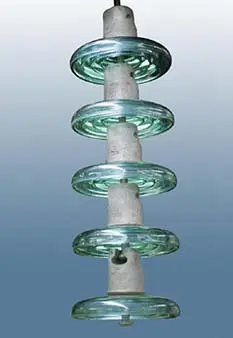
To verify a disc-insulator thermal shock station at factory acceptance, measure the air and water conditions for the specified 50 K difference, demonstrate controlled heating and rack transfer, then retain a time-stamped record for representative ceramic or glass units. The temperatures used to achieve the difference depend on the water at the installation site; 70 °C air and 20 °C water are only an example, not universal setpoints.
Contune’s thermal shock machine product page describes air preheating, an ambient-water tank, and automatic lowering of a motorized sample rack. It cites IEC 60383-1 Clause 15.1. Confirm the edition, detailed procedure, number of cycles and acceptance criteria in the purchaser’s contract.
Which test does this checklist cover?
The station is intended for ceramic (porcelain) and glass disc insulator units used on overhead lines. It heats units in air and then transfers them into water. It is different from a thermal-mechanical load cycle on an assembled insulator string; the fixture, sensors and outcome are different.
Define the temperature pair before the FAT
The published machine description gives a 50 K difference between hot and cold media. A temperature difference of 50 K equals a difference of 50 °C, but neither value is an absolute chamber temperature. Record the actual water temperature before and during each demonstration and establish the required hot-medium condition under the governing method. Where the water is warmer, the hot condition must be correspondingly higher to maintain the agreed difference.
| FAT field | What to record |
|---|---|
| Specimen | Unit type, material, size, batch and rack position |
| Hot medium | Setpoint, measured temperature, sensor location and stability |
| Cooling water | Measured temperature, sensor location and change through the run |
| Transfer | End of heating, start of lowering, immersion and any delay |
| Equipment | Machine ID, sensor calibration and software or controller version |
| Result | Cycles completed, observations, cracks or breakage and disposition |
The product page does not state a permissible transfer delay or temperature tolerance. Obtain those limits from the applicable procedure and write them into the FAT sheet before testing.
Check specimen loading and transfer
- Inspect the rack for a secure fit across the purchaser’s smallest and largest disc units. Mark each position.
- Show that temperature sensing represents the test condition specified by the method, rather than only a remote controller reading.
- Run the automatic heat-stop and lowering sequence with representative units. Record transfer events and check for collisions, splashing and incomplete immersion.
- Observe water-temperature drift when several hot units enter the tank. Define when water must be refreshed or cooled.
- Verify the safe recovery path after a power loss, sensor fault or rack obstruction.
FAT acceptance evidence
Ask the supplier to demonstrate temperature indication against a traceable reference, alarm and emergency-stop behavior, repeatability of the rack motion, and an exported record linking every unit to its test cycle. Photographs before and after exposure help identify handling damage. The contract should specify who judges the visual result and which inspection or follow-up tests apply; an intact appearance alone is not a substitute for the agreed acceptance rule.
Site and RFQ information
Send disc dimensions, unit mass, batch size, required number of cycles, available water temperature range and utility details. Confirm tank capacity, drainage, splash containment, guarded access, electrical supply and operator training. If the purchase is for a tropical site, include a realistic water-temperature range in the FAT demonstration.
Porcelain porosity is a separate material question. See the porosity-test preparation guide when building a broader laboratory plan.
FAQ
Is 70 °C always the correct heating setpoint?
No. It is the product page’s example for water around 20 °C. The required hot condition depends on measured water temperature and the governing test method.
Does the product page define how fast the rack must lower?
No. Define and verify the allowable transfer interval in the purchaser’s test procedure and FAT.
Can the same station be used for polymeric long-rod insulators?
The published equipment is for ceramic and glass disc units. A different sample type needs a separate fixture and method review.