


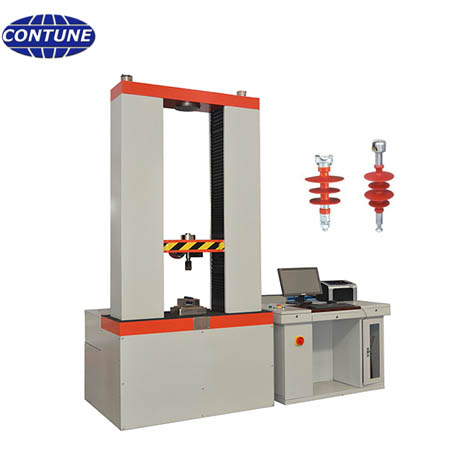
A post insulator cantilever test machine verifies mechanical performance under side loading. Buyers should select the machine based on sample height, flange or fitting design, load range and whether torsion is also required.
Contune supplies cantilever and torsion testing equipment for high-voltage insulators and related products.
Understand the load direction
Cantilever testing applies side load at a defined position, so fixture alignment and load-point control are critical.
Incorrect alignment can create unreliable results or damage fixtures.
Define sample dimensions
Post insulator height, base diameter and mounting pattern affect machine structure and fixture design.
Send drawings before quotation so the supplier can check the real working space.
Consider torsion requirements
Some laboratories need both cantilever and torsion capability.
Combined systems should be reviewed carefully because fixture and control requirements differ.
Plan safety and reporting
High mechanical loads require guarded test areas, stable mounting and clear data records for acceptance.
Buyer checklist
- Sample height
- Base mounting pattern
- Cantilever load
- Torsion requirement
- Load point position
- Safety zone
FAQ
Can a tensile tester replace a cantilever tester?
Usually no. The load direction and fixture structure are different.
What should buyers send first?
Send product drawings, load requirement, test standard and mounting details.
Discuss your requirement: send Contune the product drawing, voltage class, test standard, load range, sample length and target capacity through the contact page.