


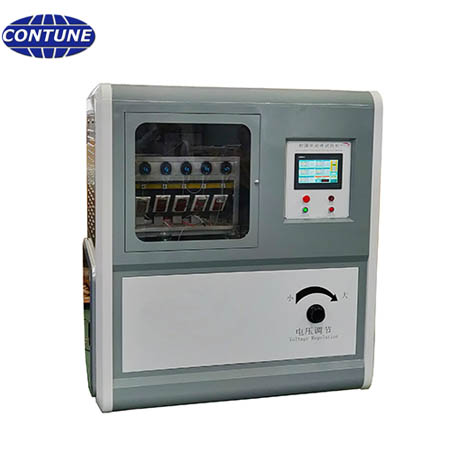
Power frequency test equipment is used to verify insulation performance under controlled high-voltage conditions. For manufacturers and laboratories, it is an important part of electrical quality control for high-voltage insulators.
This equipment is often planned with mechanical test systems and material test systems as part of an insulator testing machine selection plan.
What the test verifies
Power frequency testing helps confirm whether the insulation structure can withstand specified voltage stress.
The exact test configuration depends on product type, voltage class and buyer acceptance requirement.
Main equipment selection factors
Buyers should confirm voltage rating, transformer capacity, control cabinet, protection system, test space and grounding.
The system should include clear safety procedures because high-voltage testing requires controlled access and operator protection.
How it fits into a laboratory
Power frequency equipment should be placed in a safe test zone with suitable clearance and grounding.
It is commonly combined with mechanical test machines, tracking and erosion testers and other laboratory equipment.
Internal links for planning
Review the IEC 61109 and IEC 62217 buyer guide and compare with your customer specification before finalizing the test scope.
Buyer checklist
- Rated voltage and capacity
- Test object size and fixture requirement
- Safety interlock and grounding
- Report and data output
- Installation space
FAQ
Is power frequency testing required for every insulator?
It depends on the product standard and customer acceptance requirement.
Can Contune supply electrical test equipment with mechanical testers?
Yes. Contune can plan electrical and mechanical test equipment together.
Discuss your project: Contact Contune with product drawings, voltage class, test requirements and target capacity.