


RIV Test System – Radio Influence Voltage (RI) Test Set for High Voltage Insulators — IEC 60437:2023
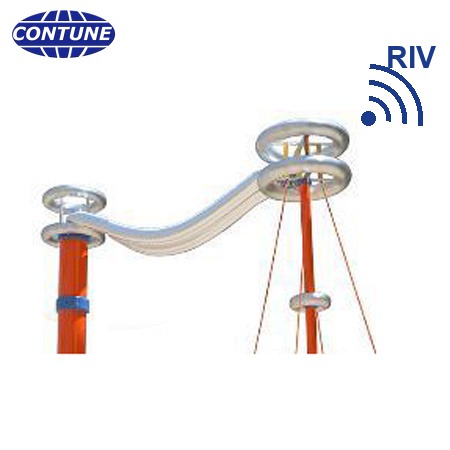
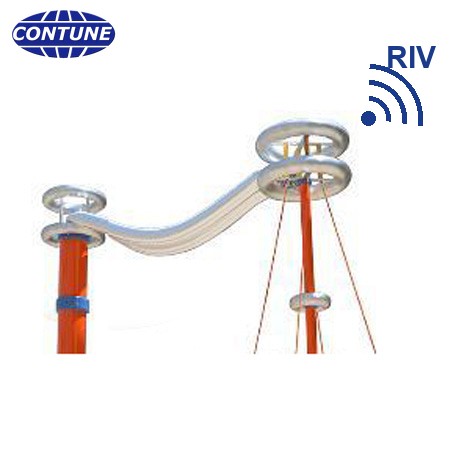
IEC 60437:2023 compliant RIV / Radio Influence Voltage test system for high voltage insulator radio interference measurement. Voltage and withstand time adjustable, customizable, 150 kV to 1000 kV models for EHV and UHV laboratories.
RIV Test System (Radio Influence Voltage Monitoring System) is a complete laboratory radio interference test solution for high-voltage overhead line insulators, including porcelain, glass and polymer composite insulator strings. Designed in accordance with IEC 60437:2023 (Edition 3.0), the system measures the radio interference voltage (RIV) generated by corona discharge on insulator fittings, grading rings and shed surfaces under clean and dry laboratory conditions, with a CISPR 16-1-1 quasi-peak receiver at 0.5 MHz / 1 MHz (0.5–2 MHz range selectable). Test voltage and withstand time are adjustable and programmable, RIV–voltage curves and corona extinction voltage are recorded automatically, and models are available from 150 kV to 1000 kV to cover EHV and UHV transmission voltage classes.
RIV test system at a glance
- Compliance: IEC 60437:2023 (third edition), measuring receiver to CISPR 16-1-1.
- What it measures: radio interference voltage (RIV) in dBμV generated by corona discharge on insulator strings, fittings and grading rings.
- Test object: clean, dry porcelain, glass and polymer composite insulator strings for AC or DC overhead lines above 1000 V.
- Measurement frequency: 0.5 MHz or 1 MHz standard; 0.5–2 MHz range selectable; CISPR 16 quasi-peak detector.
- Coupling: standard 300 Ω coupling impedance.
- Voltage range: 150 kV to 1000 kV models; other ratings, capacity and shielding customizable.
Key features and benefits
- Full compliance with IEC 60437:2023 and CISPR 16-1-1 — accepted by power utilities, high-voltage laboratories and third-party certification bodies.
- Adjustable test voltage — continuously adjustable and programmable to your specified evaluation voltage, operating voltage or project requirements.
- Adjustable withstand time — the hold time at 1.1 × specified test voltage is user-configurable (1 minute, 5 minutes or longer), covering both IEC type-test and factory quick-test procedures.
- Modular and customizable — rated voltage, power capacity, shielding chamber, automation software, report template and accessory list are all customizable; the specification is not limited to the standard model table.
- Standard 300 Ω coupling impedance with a high-precision quasi-peak RIV receiver and low background noise.
- Automatic test sequence — step-up / step-down voltage control, automatic data logging, RIV–voltage curve plotting and corona extinction voltage detection.
- Traceable reporting — PDF / CSV report export, fully traceable for IEC type-test submission.
- Safe interlock and flashover protection for high-voltage laboratory operation.
Applications
- Type test of high-voltage porcelain, glass and composite insulators according to IEC 60437.
- Factory acceptance test (FAT) and batch sampling inspection for insulator manufacturers.
- R&D and corona performance evaluation of insulator strings, grading rings and line hardware.
- Third-party HV test laboratories, power utility research institutes and transmission project material qualification.
- Radio interference performance verification of overhead transmission line hardware.
Reference standards
- IEC 60437:2023 — Radio interference test on high-voltage insulators (Edition 3.0, replaces Edition 2.0:1997).
- CISPR 16-1-1 — Specification for radio disturbance and immunity measuring apparatus and methods.
- IEC 61284 — Overhead lines — Requirements and tests for fittings.
Test method and acceptance criteria (IEC 60437:2023)
The IEC 60437 radio interference test is performed on clean and dry insulator samples in the laboratory:
- Prepare the clean, dry insulator sample and install the simulated conductor and grading rings as per the actual service configuration.
- Raise the voltage to 1.1 × specified test voltage and hold for the configured withstand time (minimum 5 minutes for type test).
- Step the voltage down gradually and record RIV at each voltage point down to 30% of the test voltage.
- Ramp up again to 1.1 × specified test voltage and hold for 1 minute.
- Step down once more, record the RIV readings, plot the RIV–voltage curve and determine the corona extinction voltage.
- For factory batch quick test: apply 1.1 × test voltage for at least 1 minute, then measure RIV at the specified evaluation voltage.
IEC 60437:2023 defines the test method; the RIV limit (dBμV) is set by the project specification or the purchaser’s technical agreement. Common acceptance benchmarks: RIV at specified operating voltage ≤ 60 dBμV (0.5 MHz, quasi-peak), and a corona extinction voltage higher than the maximum operating voltage of the transmission line.
Frequently asked questions about the RIV test
1. What is RIV monitoring for insulators?
RIV monitoring measures the radio influence voltage — the radio-frequency noise generated by corona discharge on high-voltage insulator strings and their fittings. The RIV test evaluates the radio interference performance of overhead transmission line insulators, and is specified by IEC 60437.
2. What standard does this RIV test system follow?
The RIV Test System follows IEC 60437:2023 (third edition, which replaced the 1997 second edition). Its measuring receiver meets CISPR 16-1-1. This system does not itself define numerical limits; the RIV limit in dBμV is set by the project specification or the purchaser’s technical agreement.
3. Can it test composite, glass and porcelain insulators?
Yes. The system tests porcelain insulator strings, toughened glass insulator strings and polymer composite insulator strings, including composite station post and hollow core station post insulators covered by the third edition of IEC 60437.
4. Is the RIV test done under wet or contaminated conditions?
No. The IEC 60437 laboratory RIV test is performed on clean, dry insulators at atmospheric conditions of 10–35 °C and 45–75% relative humidity. Radio interference testing under rain, wetting or pollution is outside IEC 60437 and follows other publications such as CISPR 18-2.
5. Can the voltage and withstand time be adjusted?
Yes. The normal RIV test procedure ramps to 1.1 × the specified test voltage and holds for a configurable withstand time — a minimum of 5 minutes for type tests, or at least 1 minute for the factory quick test procedure. Test voltage is also adjustable and programmable to your evaluation voltage.
6. How do I choose the right RIV test system model?
Select the model by the highest system voltage of the insulators you test: RIV-150 for 132 kV class strings, RIV-250 for 220 kV class, RIV-500 for 400–500 kV EHV strings, and RIV-1000 for 1000 kV UHV strings. Because rated voltage, power capacity and shielding are customizable, the final rating is normally engineered to your laboratory layout and project specification rather than to the standard table alone.
Related insulator test equipment
This RIV test system belongs to the electrical test equipment for insulators range. Contune also supplies the insulator power frequency test equipment for withstand, dry and wet flashover and puncture tests, and the combined electro-mechanical strength tester for string insulator units. Browse the full insulator testing machines catalogue for mechanical and electrical test solutions.
Contact our engineering team for a detailed datasheet, layout drawing, quotation and reference cases of the RIV test system for your high-voltage insulator laboratory.
Model selection table
| Model Series | Rated Test Voltage | Test Frequency | Detector Type | Coupling Impedance | Main Application |
|---|---|---|---|---|---|
| RIV-150 | 150 kV | 0.5 MHz / 1 MHz (0.5–2 MHz optional) | CISPR 16 Quasi-Peak | 300 Ω | 132 kV class insulator string RI test |
| RIV-200 | 200 kV | 170 kV class insulator string RI test | |||
| RIV-250 | 250 kV | 220 kV class insulator string RI test | |||
| RIV-500 | 500 kV | 400 kV / 500 kV EHV insulator string RI test | |||
| RIV-800 | 800 kV | 750 kV EHV insulator string RI test | |||
| RIV-1000 | 1000 kV | 1000 kV UHV insulator string RI test |
Customization note: rated voltage, withstand time, power capacity, shielding design, automation software, test frequency and report format can all be engineered to your project specification. The models above are standard references only.
Customization options
- Adjustable withstand voltage time — the hold time at 1.1 × specified test voltage is configurable (1 min, 5 min, or as required by your test procedure).
- Adjustable / programmable test voltage — the applied voltage can be set and ramped precisely to your defined evaluation voltage.
- Flexible parameters beyond the table — rated voltage, capacity, coupling network, receiver, shielding enclosure and control software can all match your acceptance limits and project documents.
Common acceptance benchmarks
- RIV at specified operating voltage ≤ 60 dBμV (0.5 MHz, quasi-peak), per purchaser agreement.
- Corona extinction voltage higher than the maximum operating voltage of the transmission line.
Measurement chain
- Receiver: CISPR 16-1-1 quasi-peak measuring receiver, low background noise.
- Coupling: standard 300 Ω coupling impedance / coupling network.
- Test frequencies: 0.5 MHz and 1 MHz standard; 0.5–2 MHz range optional.
- Output: automatic RIV–voltage curve, corona extinction voltage detection, PDF / CSV traceable reports.
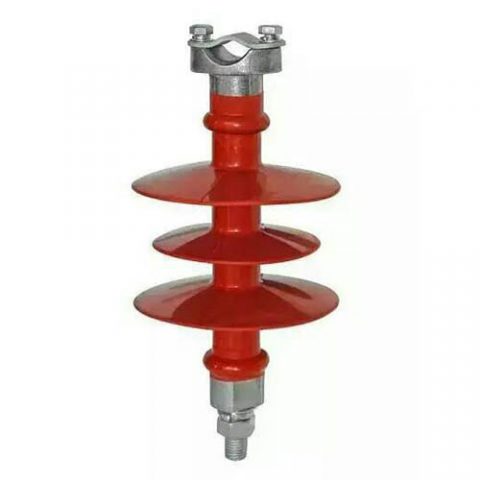
11 kV Composite Pin Insulator for Overhead Distribution Lines
11KV composite pin insulators are used on 11KV high voltage overhead power distribution lines. These pin insulators are made by FRP core, silicon rubber, and metallic fittings. On the bottom side of the fitting, it is where we call pin, the pin has a screw which is used to fix the insulator onto the cross-arm. On header fitting, it usually has a groove shape to fix conductors.