


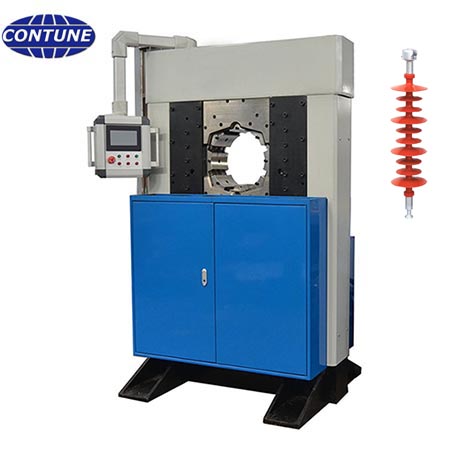
Long rod composite insulators require equipment planning around product length, end fitting strength, silicone housing quality and tensile testing. Handling and fixture design are especially important for long samples.
A reliable long rod production route connects FRP rod preparation, crimping, molding and final test equipment.
Plan for length and handling
Long samples require enough workshop space, supports, lifting tools and safe movement between operations.
Handling should protect the silicone housing and fittings from damage.
Control end fitting assembly
End fitting preparation and crimping machine are critical for mechanical reliability.
A suitable {crimping machine} should match fitting type, force range and quality records.
Match molding equipment
Mold length, injection volume, heating and demolding method should fit the product range.
Review the {rubber injection molding machine} together with mold design before purchase.
Include tensile testing
Long rod products often require horizontal tensile tester verification with long stroke and safe sample support.
A {horizontal tensile tester} is commonly used for full-size products.
Buyer checklist
- Maximum product length
- FRP rod diameter
- End fitting type
- Mold length
- Handling method
- Tensile test requirement
FAQ
Why is handling important?
Long products are easier to bend, scratch or misalign during production.
Is tensile testing required?
For many long rod products, tensile testing is a key mechanical verification step.
Discuss your project: Send drawings, test standards, voltage class, expected capacity and destination country through the Contune contact page.