


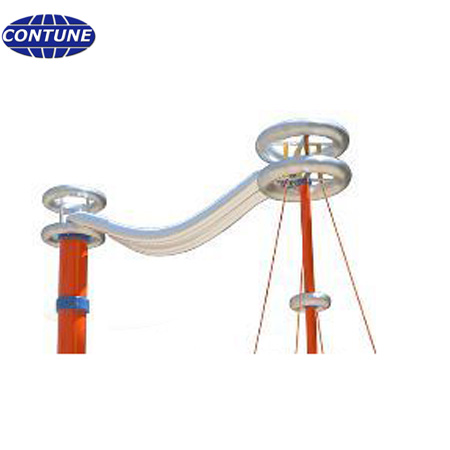
In a high voltage insulator test system, the transformer usually gets the most attention. In practice, the protective resistor and capacitive divider often decide whether the system is safe, measurable and repeatable.
Contune 150kV and 250kV AC system examples list these items explicitly, which is useful for buyers comparing complete systems rather than isolated high voltage components.
Source facts used
- 150kV system protective resistor: 150kV, 0.33A, 5kΩ.
- 250kV system protective resistor: 250kV, 0.4A, 5kΩ.
- 150kV system capacitive divider: 150kV AC, 300pF±2%.
- 250kV system capacitive divider: 250kV AC, 300pF±2%.
- Both systems are designed around IEC 60060 high-voltage test techniques.
The protective resistor is a safety and equipment protection item
During flashover or abnormal discharge, the resistor helps limit current and reduce stress on the transformer, divider and test object. It should be matched to rated voltage and current rather than chosen as a generic accessory.
Buyers should ask whether resistor rating, insulation distance and installation method are included in the offer. The component must suit the layout of the high voltage room.
The capacitive divider affects measurement confidence
The divider provides the voltage measurement reference for the control and display system. Accuracy and rated voltage matter because a test report is only useful when the measured voltage can be trusted.
For factory acceptance, ask the supplier how the divider signal is used, what calibration documents are supplied and whether the system supports automatic report output.
How to compare quotations
Two quotations with the same transformer voltage can be very different if one includes a complete measuring and protection package and the other does not. Request a component list with model, voltage, current and accuracy data.
This is especially important for buyers setting up a new insulator testing laboratory, where grounding, clearance and safety devices must be coordinated.
Buyer checklist
- Protective resistor voltage and current rating
- Resistance value and installation layout
- Divider rated voltage and capacitance tolerance
- Calibration and measurement documentation
- Control cabinet protection logic
- Integration with test reports
FAQ
Can a buyer use a third-party divider?
Technically yes, but compatibility with the control system, calibration chain and safety design must be checked before purchase.
Why do two systems with similar voltage have different prices?
Complete systems may include measurement, resistor, safety control and reporting functions that are absent in lower-priced component offers.
Need help matching the specification? Send the sample drawing, voltage class, test standard, expected capacity and destination country through the Contune contact page.