


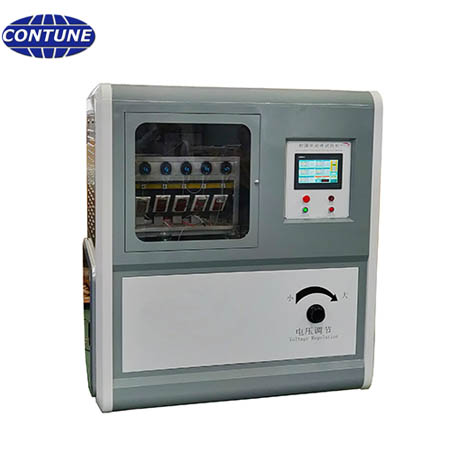
A salt fog test chamber helps evaluate how composite insulators and polymeric insulation materials behave under salt, humidity and pollution-related stress.
For manufacturers serving coastal, industrial or high-pollution markets, environmental testing can become part of the laboratory plan together with tracking and erosion testing.
Why salt fog testing matters
Outdoor insulators may operate in coastal or polluted environments where salt and moisture affect surface performance.
Testing helps compare materials, sheds, housing designs and production consistency.
Chamber selection factors
Important factors include chamber volume, sample size, fog generation, temperature control, corrosion-resistant materials and drainage.
The chamber should be easy to clean and maintain after long tests.
Laboratory integration
Salt fog testing is usually part of environmental or design verification rather than routine testing of every product.
It should be planned with sample preparation, electrical test safety and reporting workflow.
Relation to material choice
Stable silicone rubber and correct manufacturing process are still essential. Test equipment supports quality control but cannot compensate for poor material selection.
Buyer checklist
- Sample size
- Chamber volume
- Test duration
- Fog and temperature control
- Cleaning and maintenance
FAQ
Is salt fog testing the same as tracking and erosion testing?
No. They evaluate different stress conditions and usually require different equipment.
Who needs salt fog test capability?
Manufacturers, utilities and laboratories working with coastal or polluted service environments may need it.
Discuss your project: Contact Contune with product drawings, voltage class, test requirements and target capacity.