


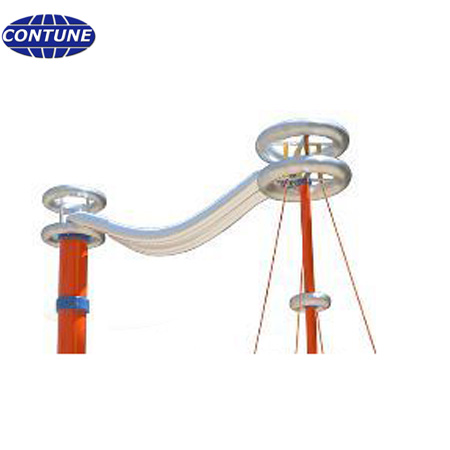
A high voltage AC test laboratory should be planned around the full test system, not only around the transformer. For insulator manufacturers, the layout must coordinate the transformer, protective resistor, capacitive divider, control area, grounding and sample handling route.
Contune 150kV/50kVA and 250kV/100kVA AC voltage test system samples provide practical reference points for 33kV and 11-66kV insulator laboratories.
Source facts used
- 150kV/50kVA AC voltage test system is described for 33kV glass, porcelain and polymer insulators.
- 250kV/100kVA AC test system is described for 11kV to 66kV glass, porcelain and polymer insulators.
- IEC 60060-1:2010 and IEC 60060-2:2010 are listed as applied standards.
- Both examples use single-phase 50Hz output and 1000:1 voltage turns ratio.
- 150kV system output current is listed as 0.333A; 250kV system output current is listed as 0.4A.
- Protective resistor examples list 5kΩ rating; capacitive divider examples list 300pF±2%.
Separate the high voltage area and control area
The operator should not stand near the test object during energization. The layout needs a controlled high voltage zone, a safe control console position, visible warning devices and interlocks that match the buyer’s operating procedure.
The equipment list should include transformer, voltage regulator, protective resistor, divider, control cabinet, grounding points and safety fencing or room access control.
Place resistor and divider as system components
The protective resistor and capacitive divider are not small accessories. Their voltage rating, current rating, physical clearance and connection method influence both measurement and safety.
A 150kV or 250kV laboratory should reserve space for these components and their connections before the civil layout is fixed. Retrofitting them later usually creates awkward cable paths and poor access.
Match voltage class to actual products
A 150kV/50kVA system may be suitable for many 33kV insulator test needs, while a 250kV/100kVA system provides a broader reference for 11kV to 66kV insulators. The final choice depends on standard, sample capacitance, dry or wet test conditions and required margin.
Buyers should connect this decision with the power frequency test equipment product page and wider laboratory setup planning.
Prepare the RFQ as a layout problem
A useful RFQ should include room size, available power supply, floor plan, grounding constraints, sample dimensions, expected tests and whether wet testing is required. This gives the supplier enough context to propose a workable laboratory instead of just a transformer price.
For new factories, commissioning, operator training and report templates should be included in the scope from the start.
Buyer checklist
- Voltage class and maximum test voltage
- Required kVA and output current
- Dry/wet/flashover/withstand test requirement
- Transformer, resistor and divider placement
- Control room or console location
- Grounding, fencing and interlock plan
- Report and commissioning requirement
FAQ
Can one AC test lab cover 33kV and 66kV products?
It can if voltage, kVA, current, fixture clearance and standards are planned with enough margin. The final selection should be confirmed from product drawings and test requirements.
Why include room layout in the RFQ?
High voltage equipment depends on clearance, grounding, access and safety behavior. A layout-free quotation may miss important installation costs.
Need help matching the equipment scope? Send drawings, voltage class, standard, capacity and destination country through the Contune contact page.