


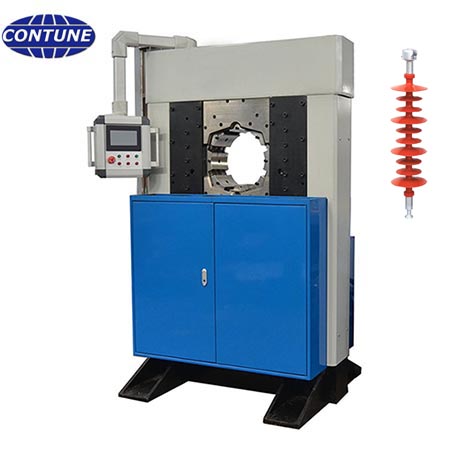
The composite insulator crimping process secures metallic end fittings to the FRP core. It is one of the most important mechanical steps in production.
A stable process requires suitable rod preparation, fitting design, die alignment, controlled force and final mechanical verification.
Prepare the FRP core and fitting
The rod and fitting must be clean, correctly sized and inspected before crimping.
Poor preparation can lead to slipping, cracking or unstable tensile results.
Control crimping force and tooling
The insulator crimping machine applies controlled force through dies.
Tooling must match the fitting geometry and product range.
Verify the result
After crimping, tensile or bending tests may be used to verify mechanical strength.
Good production records help trace failure causes.
Improve repeatability
Repeatability depends on equipment, tooling, operator procedure and inspection discipline.
Buyer checklist
- Rod diameter
- Fitting drawing
- Crimping force
- Die set
- Final test method
FAQ
Why is crimping critical?
It determines the mechanical connection between fitting and core.
Can one machine handle different fittings?
Yes, if suitable dies and capacity are planned.
Discuss your project: Contact Contune with product drawings, voltage class, test requirements and target capacity.