


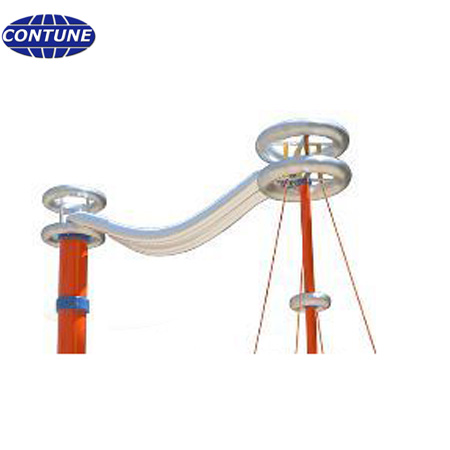
Dry and wet flashover tests are common acceptance and laboratory tests for overhead line and station insulators. The machine choice affects repeatability, operator safety and how quickly a laboratory can change between product types.
A Contune 250kV/100kVA AC test system example is designed for 11kV to 66kV glass, porcelain and polymer insulators and includes the main components needed for controlled high voltage testing.
Source facts used
- 250kV/100kVA AC test system covers 11kV to 66kV insulator levels.
- Available for electrical puncture voltage, dry/wet flashover and power frequency voltage tests.
- Single-phase 50Hz system with 1000:1 voltage turns ratio.
- Protective resistor rating: 250kV, 0.4A, 5kΩ.
- Capacitive voltage divider rating: 250kV AC, 300pF±2%.
What changes between dry and wet tests
Dry tests focus on the insulation behavior in controlled indoor conditions. Wet flashover adds water spray arrangement, repeatable wetting condition and extra attention to drainage, grounding and operator separation.
For buyers, the high voltage source is only one part of the specification. The test area, spray system, control distance and reporting method should be included in the layout discussion.
Why the voltage divider and resistor should not be an afterthought
A capacitive voltage divider gives the control system a measured voltage signal. A protective resistor helps limit fault current and protects both equipment and samples during flashover events.
When comparing suppliers, ask whether these components are sized and quoted with the transformer. A low initial price can become misleading if the divider, resistor or safety control cabinet are treated as optional items.
How to describe the requirement in an RFQ
A clear RFQ should state voltage class, insulator material, sample dimensions, intended standard, dry/wet requirement and expected throughput. Photos or drawings help the supplier plan fixtures and clearances.
For a broader test room package, combine this requirement with the insulator testing laboratory setup checklist.
Buyer checklist
- Voltage class range from 11kV to 66kV
- Glass, porcelain or polymer material
- Dry test only or dry and wet flashover
- Divider, resistor and control cabinet included
- Water spray and drainage requirement
- Safety fence, grounding and warning system
FAQ
Is a 250kV system always required for 66kV insulators?
Not always. The final voltage depends on the standard, product geometry and safety margin. A 250kV class system is a common planning reference for this range.
Can puncture and flashover tests share the same system?
They can share the high voltage source in many laboratories, but fixtures, protection and procedure details may differ.
Need help matching the specification? Send the sample drawing, voltage class, test standard, expected capacity and destination country through the Contune contact page.