


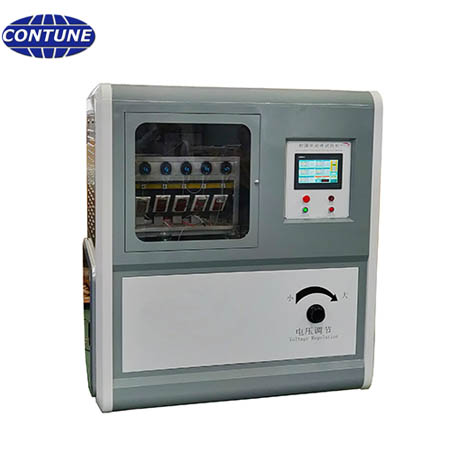
A long rod insulator tensile test machine must handle long samples, high loads and special end fittings safely. A standard vertical material tester is often not suitable for full-size composite long rod insulators.
For many products, a horizontal tensile tester provides the most practical layout for loading, support and operator safety.
Define maximum sample length
The machine bed must fit the longest product plus fixtures and stroke allowance.
Future product sizes should be considered before finalizing the frame length.
Check rated load and safety factor
The load capacity should cover the product rating and the required test method.
Safety protection is important because high-load failure can release energy quickly.
Design fixtures around fittings
Ball-socket, clevis, eye and custom fittings require different fixture interfaces.
Review the fixture selection guide before comparing quotations.
Review control and reporting
The system should record load, displacement, time and result clearly enough for factory or customer acceptance.
Buyer checklist
- Maximum product length
- Rated tensile load
- End fitting type
- Required stroke
- Safety enclosure
- Data and report format
FAQ
Why use horizontal testing?
Horizontal machines are better suited to long samples and safer loading for many long rod products.
Can one machine test multiple voltage classes?
Yes, if length, load and fixtures are planned for the full product range.
Discuss your requirement: send Contune the product drawing, voltage class, test standard, load range, sample length and target capacity through the contact page.