


A new factory should not start a composite insulator production line planning project by collecting random machine prices. The better starting point is the product range, expected capacity, voltage class, local standards and the level of testing that customers will require.
For new composite insulator manufacturers, production equipment, testing equipment and factory layout should be planned together. Contune connects composite insulator production machines, process know-how and testing equipment into a practical manufacturing route rather than a disconnected machine list.
Start with the product range
The product plan defines almost every technical decision. Long rod suspension insulators, post insulators, station products, railway insulators and surge arrester housings may need different molding methods, end fitting preparation, crimping solutions and test equipment.
A useful planning document should list voltage class, creepage distance, maximum product length, core rod diameter, end fitting types, shed profile and expected monthly output. Without this information, equipment quotations often look cheaper than they really are because important tooling, fixtures or test systems are missing.
- Voltage range and product type
- Maximum length and diameter
- Fitting type and crimping requirement
- Target monthly production capacity
- Required routine and type tests
Map the manufacturing process before buying machines
A composite insulator factory normally includes FRP rod preparation, end fitting assembly, crimping, silicone rubber molding, trimming, marking, routine testing, final inspection and packing. The exact flow depends on the product and the chosen molding process.
The article on the composite insulator manufacturing process explains the basic route from FRP rod to final test. New manufacturers should use that process map to decide which machines are required from the first phase and which can be added after orders become stable.
Separate core equipment from optional capacity upgrades
A first production line does not always need the largest possible machine set. However, it must include the equipment that controls product quality: reliable molding, correct end fitting crimping, repeatable marking, suitable handling tools and the test equipment required for acceptance.
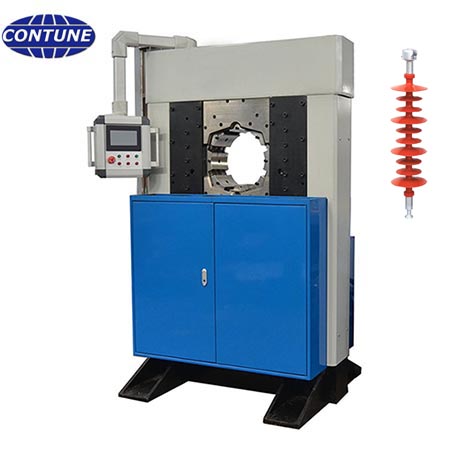
For production equipment, common starting points include a composite insulator crimping machine, a rubber injection molding machine, molds, preparation tools and final inspection equipment. Capacity upgrades can then be planned around bottlenecks rather than guesses.
Plan testing and quality control from day one
Some buyers treat testing as a future investment, but this can delay customer approval. Even if a complete high-voltage laboratory is not built immediately, the factory should define which routine tests will be done in-house and which type tests will be outsourced.
Mechanical load tests, dimensional checks, visual inspection and electrical requirements should be connected to customer specifications. If the production line will supply utilities or export markets, the testing plan should be discussed early with the equipment supplier.
Prepare the RFQ with enough technical detail
A clear RFQ reduces wrong assumptions and makes quotations easier to compare. Instead of asking only for a “composite insulator production line”, buyers should include drawings, voltage classes, expected output, preferred molding method, available workshop size, power supply and destination country.
The production line RFQ preparation guide gives a practical structure for sending this information to a supplier. More complete input usually leads to a more realistic scope, better layout planning and fewer surprises during installation.
Buyer checklist
- Product drawings and voltage classes
- Target capacity by product family
- Workshop size and utilities
- Molding and crimping requirements
- Routine test and type test plan
- Installation, training and commissioning scope
FAQ
Can a new manufacturer start with a small composite insulator line?
Yes. A phased line can be practical if the core quality-control steps are included and the layout leaves space for future capacity expansion.
What information is needed before quotation?
Send product drawings, voltage range, target monthly output, required tests, workshop information and destination country.
Should testing equipment be purchased with the production line?
At minimum, the routine quality-control requirement should be planned with the production line. A larger laboratory can be phased according to customer and certification needs.
Need a practical equipment recommendation? Send Contune the product type, voltage class, drawings, required standards, target capacity and destination country through the contact page.