


Composite insulator manufacturing process planning is not only about buying machines. A stable production line has to control FRP core preparation, silicone rubber housing, shed formation, metallic end fitting assembly, marking, inspection and final tests. For buyers who are building a new polymer insulator workshop, the most important question is how each process step connects with the next one.
Contune supplies production equipment and testing machines for high-voltage composite insulators. This guide explains the main process flow and shows where key equipment such as an insulator crimping machine, rubber injection equipment and insulator testing machines fit into the manufacturing plan.
1. FRP core preparation
The FRP or ECR rod is the load-bearing core of a composite insulator. Before silicone rubber housing is applied, the rod normally needs cutting, surface cleaning and surface preparation. The purpose is to create a stable bonding condition between the core, rubber housing and end fittings.
For production planning, this step affects dimensional accuracy, bonding reliability and repeatability. If the rod surface is inconsistent, later crimping and mechanical testing may show variation even when the molding equipment is working correctly.
Relevant equipment can include cutting, sanding or grinding systems such as FRP rod sanding equipment, cleaning stations and inspection fixtures.
2. Silicone rubber housing and shed molding
The silicone rubber housing provides weather resistance, electrical insulation and creepage distance. In modern composite insulator production, the housing and sheds are commonly formed by silicone rubber injection molding or compression-related molding processes, depending on the product design and production scale.
For long rod insulators, hollow core insulators or surge arrester housings, buyers should consider mold design, heating control, rubber feeding stability, demolding convenience and cycle time. The molding process must match the insulator length, voltage class and shed profile.
For this stage, buyers often search for a rubber injection molding machine for composite insulators or customized silicone rubber molding equipment.
3. Metallic end fitting assembly and crimping
End fittings connect the composite insulator to the power line or substation hardware. The crimping process must hold the FRP core securely without damaging it. This is a critical mechanical step because the finished product must withstand tensile, bending or cantilever loads required by the application.
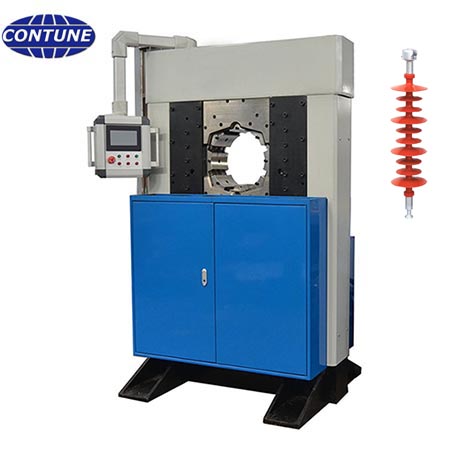
An insulator crimping machine is used to press the metallic fitting onto the FRP core with controlled force and tooling. For different product families, the crimping machine may need different dies, fixtures, stroke settings and quality inspection methods.
Buyers should evaluate crimping capacity, repeatability, tooling changeover, safety protection and whether the machine can support the voltage and diameter range of the planned products.
4. Marking, inspection and intermediate quality control
After molding and crimping, the product usually needs marking, visual inspection and dimensional checks. Marking can include rated voltage, product code, batch number, manufacturer name or customer-specific identification.
A laser marking machine for composite insulators can help improve traceability and reduce manual marking variation. Intermediate inspection is important because it prevents defective products from entering final testing or shipment.
5. Mechanical testing after production
Mechanical tests confirm whether the finished insulator can withstand the intended load. Depending on the insulator type, common tests include tensile load, cantilever, bending, torsion and combined electro-mechanical strength tests.
Typical equipment includes an insulator tensile testing machine, tension and cantilever tester, and cantilever and torsion testing machine. These machines are especially important for manufacturers who need stable quality records and customer acceptance documents.
6. Electrical and material-related testing
Composite insulator manufacturers may also need electrical and material-related tests, especially when supplying to utilities or export markets. Depending on the target standard and buyer requirements, tests may include power frequency, tracking and erosion, water diffusion, thermal shock and other verification steps.
For example, Contune offers power frequency test equipment and a tracking and erosion test machine for polymer insulators. These machines help manufacturers evaluate insulation performance and material resistance under defined test conditions.
7. How to plan a complete production line
A practical composite insulator production line should be designed around product range first, not around individual machines. Buyers should define voltage class, insulator type, annual capacity, sample length, maximum load, required tests and available workshop space before selecting equipment.
For new manufacturers, Contune can help map production equipment, testing equipment and commissioning steps into a turnkey plan. Start with the product equipment overview or send your insulator specification for a machine recommendation.
FAQ
What equipment is needed to manufacture composite insulators?
Typical equipment includes FRP rod preparation equipment, silicone rubber molding equipment, end fitting crimping machines, marking equipment, inspection fixtures and final testing machines.
Why is crimping important in composite insulator production?
Crimping fixes the metallic end fitting to the FRP core. Poor crimping can cause mechanical weakness, unstable tensile results or product failure under load.
Which tests are important after manufacturing?
Common final checks include tensile load, bending, cantilever, torsion, power frequency and tracking or erosion tests, depending on the product standard and buyer requirements.
Need a production equipment plan? Contact Contune with your voltage class, product length, load range and target capacity.
For a broader equipment layout, read Composite Insulator Production Line: Key Equipment and Process Flow.