


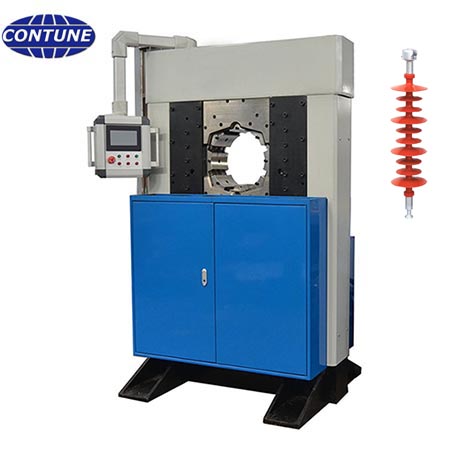
The equipment needed to manufacture composite insulators depends on product type and production capacity, but most factories need a connected set of machines for FRP rod preparation, silicone rubber molding, end fitting assembly, marking and final testing.
This article summarizes the main equipment families and links them to the composite insulator manufacturing process.
FRP rod preparation equipment
The FRP core needs cutting, surface preparation and inspection before it enters later production steps. Equipment may include cutting machines, sanding or grinding systems and cleaning fixtures.
Surface consistency affects bonding and final mechanical performance.
Silicone rubber molding equipment
Rubber injection or molding equipment forms the housing and sheds. Mold design, heating, pressure control and demolding method are important for stable production.
The molding system should match product length, shed profile and capacity target.
End fitting assembly and crimping
End fitting preparation and crimping secure the metallic fittings to the FRP core. An insulator crimping machine is one of the key machines in this step.
Crimping quality must be verified by mechanical testing.
Marking, inspection and testing
Marking systems improve traceability. Final tests confirm mechanical, electrical and material performance according to the buyer specification.
Typical laboratory equipment may include tensile testers, cantilever systems, power frequency equipment and tracking and erosion testers.
FAQ
Is a complete production line necessary for a new manufacturer?
It depends on business scope. Some buyers start with core machines, while others need a full turnkey line.
Which machine is most critical?
Molding, crimping and final testing are all critical because they directly affect product reliability and acceptance.
Can equipment be added in stages?
Yes. A phased plan can start with core production and quality control, then expand laboratory capability.
Need help selecting equipment? Contact Contune with your insulator type, voltage class, load range, required tests and target capacity.