


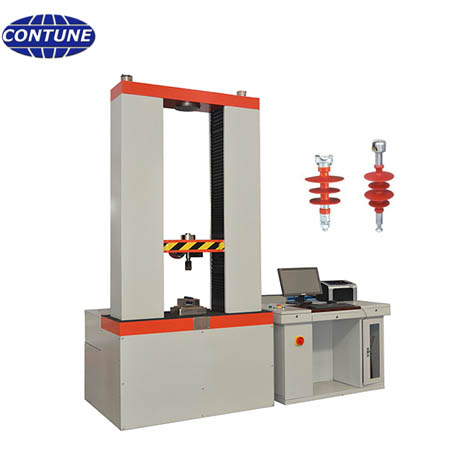
Choosing an insulator testing machine for IEC 61109-related composite insulator work starts with the product, not the machine model. Buyers need to define the insulator type, rated voltage, mechanical load, length, fitting design and acceptance tests before comparing equipment.
Contune supplies mechanical and electrical test systems for high-voltage insulators. This guide explains the main selection points and links them to practical equipment such as tensile testing machines, cantilever and torsion testers and tracking and erosion test equipment.
Start with the insulator type and load range
A suspension composite insulator, post insulator and line fitting assembly do not create the same load case. The machine frame, fixture, stroke, sensor range and control method should be selected around the actual sample and test direction.
For long rod products, tensile load capacity and sample length are usually critical. For post insulators, cantilever and torsion capacity may become more important.
Match mechanical tests to production quality control
Manufacturers need repeatable quality control after crimping, molding and assembly. A tension and cantilever test machine can support routine verification, while larger custom systems may be required for high-load or long-sample products.
The test machine should provide stable loading, clear data output and safe operation for heavy samples.
Consider electrical and material tests early
IEC-related acceptance may involve more than mechanical strength. Depending on the product and buyer requirements, the laboratory may also need power frequency test equipment, water diffusion, tracking and erosion, thermal shock or other material-related equipment.
Planning these machines together avoids a production line that can manufacture products but cannot produce the required test records.
Check fixtures, controls and documentation
Fixtures are often as important as the main frame. They must match end fittings, sample geometry and load direction. Control software should support test records, calibration workflow and clear reporting.
Before ordering, buyers should confirm maximum load, sample length, fixture scope, sensor accuracy, data export, safety protection and installation requirements.
Connect testing equipment with production equipment
Testing machines should be selected together with the composite insulator manufacturing process. Crimping, molding and final test requirements are linked, and weak coordination can cause bottlenecks or incomplete quality control.
FAQ
Is one testing machine enough for all IEC 61109-related work?
Usually not. Mechanical load tests, electrical tests and material tests often require different machines or test systems.
What information should buyers provide before requesting a test machine quote?
Provide insulator type, maximum length, load range, fitting type, test standard, required report format and available laboratory space.
Can Contune customize insulator testing machines?
Yes. Contune can discuss customized load capacity, fixtures, sample length, controls and laboratory planning for high-voltage insulator projects.
Need help selecting equipment? Contact Contune with your insulator type, voltage class, load range, required tests and target capacity.