


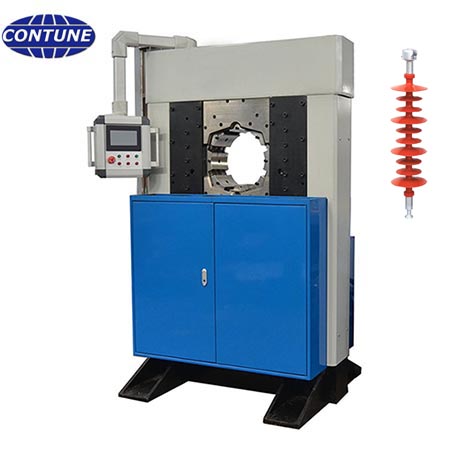
Composite insulator end fitting crimping force control directly affects mechanical connection between the FRP core and metallic fittings. Incorrect force or tooling can cause fitting slip, rod damage or inconsistent test results.
Crimping is a core process in the composite insulator production line and should be verified by mechanical testing.
Why force control matters
Too little force may fail to lock the fitting securely, while excessive force can damage the rod or fitting.
The correct force depends on fitting design, rod diameter, material and die geometry.
Tooling and die design
Crimping dies should match fitting drawings and product range.
Tooling repeatability is as important as machine capacity.
Machine control and records
A suitable crimping machine should support stable force application and repeatable operation.
Production records help trace quality issues and improve process control.
Verify with testing
Final tensile or mechanical tests confirm whether the crimping process meets the product requirement.
Buyer checklist
- Rod diameter
- Fitting drawing
- Target crimping force
- Die set
- Process records
- Final tensile test
FAQ
Is crimping force the only quality factor?
No. Rod preparation, fitting design, alignment and dies also matter.
Can crimping equipment be customized?
Yes. It is commonly matched to the buyer fitting and product range.
Discuss your requirement: send Contune the product drawing, voltage class, test standard, load range, sample length and target capacity through the contact page.